

Will the Ukraine War Return Poland to Europe’s Democratic Fold?
In the light of the Russian war against Ukraine, the European Order is being renegotiated. Karolina Wigura and Jaroslaw Kuisz speculate about what these developments could mean for Poland and its relations with Europe.
By Karolina Wigura and Jaroslaw Kuisz
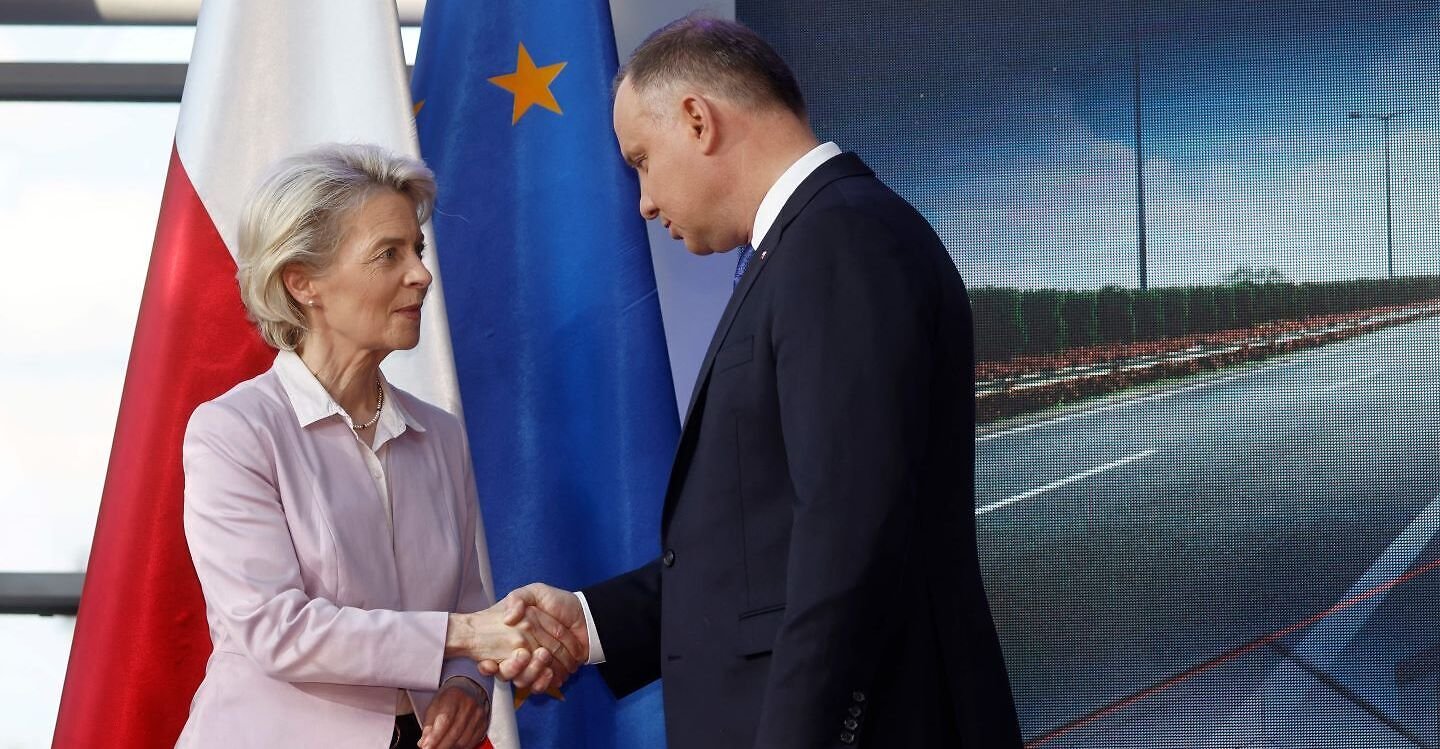
What a difference a war makes. Before Russia’s invasion of Ukraine in February, Poland was considered the black sheep of Europe. The illiberal government under the ruling Law and Justice party trampled on the country’s democratic constitution, subordinated the public media, and attacked women’s and minorities’ rights. Poland became an outcast within the European Union, which launched various infringement proceedings against the Polish government for violating the bloc’s rules on democratic governance.
The government in Warsaw seemed happy with this state of affairs. To Polish voters, tensions with Brussels could be spun into proof of their country’s uncompromised self-determination. Other European populists found an open door in Warsaw: Last year, for example, France’s then-presidential candidate Marine Le Pen, Hungarian Prime Minister Viktor Orban, and other like-minded leaders joined Law and Justice party head Jaroslaw Kaczynski in Warsaw to denounce an alleged Brussels power-grab that threatened to turn the EU into a “superstate.”
Please continue to read this article on Foreign Policy.

Karolina Wigura is the political editor of Kultura Liberalna, an assistant professor at the University of Warsaw’s Faculty of Sociology, and a Richard von Weizsäcker fellow at the Robert Bosch Academy. Twitter: @KarolinaWigura
Jaroslaw Kuisz is the editor in chief of Kultura Liberalna, a senior lecturer at the University of Warsaw’s Faculty of Law and Administration, and a policy fellow at the University of Cambridge.