Forging Partnerships and Building Alliances
We are living through a period of profound change. International cooperation is coming under pressure, democratic systems can no longer be taken for granted, and geopolitical certainties are shifting. Much of what was long considered stable must be rethought. It is precisely during such times that questions of partnerships and alliances arise in new ways.
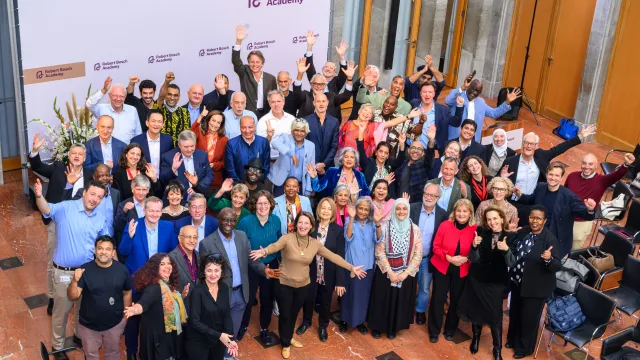
Forging partnerships and alliances formed the focal point of the 2026 Richard von Weizsäcker Forum. Acknowledging the complexity of this moment, the Forum strove to foster experimentation and rethinking rather than answers.
Festival of Ideas
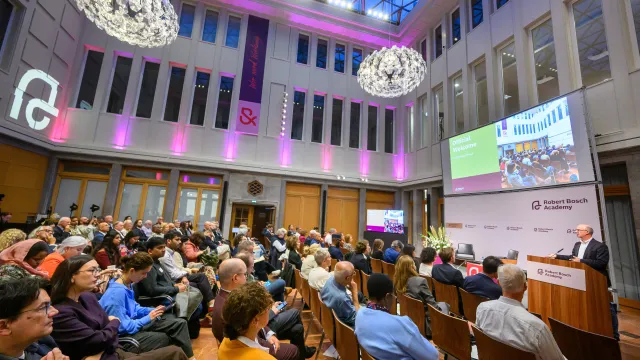
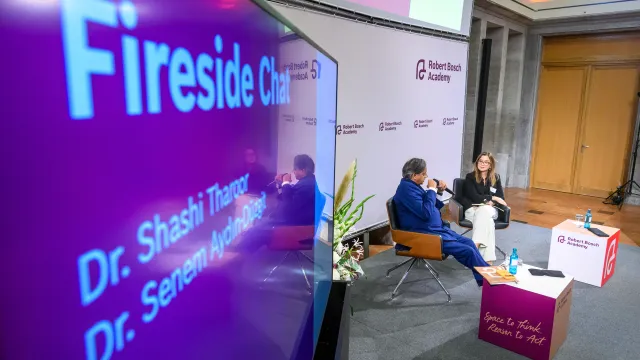
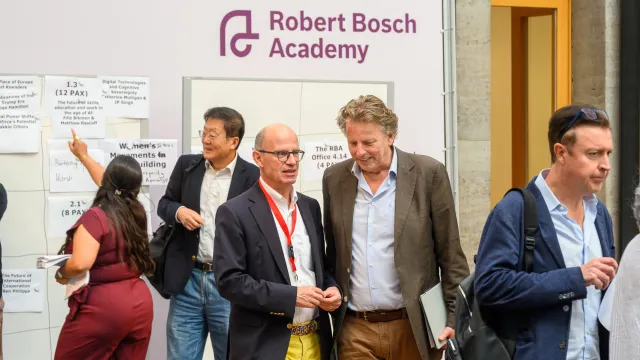
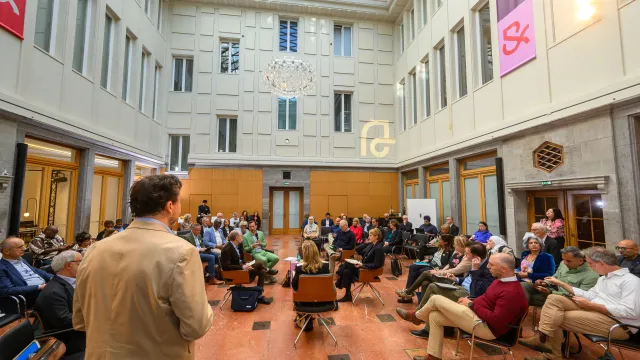
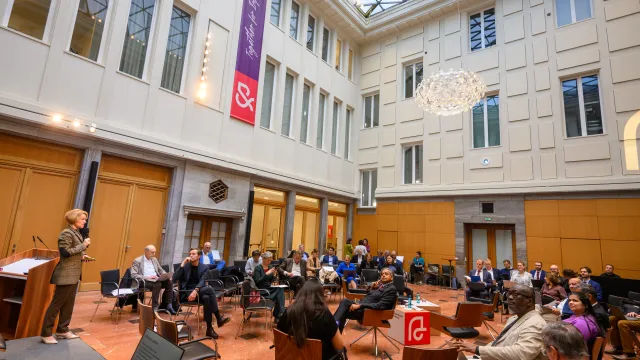
The Festival of Ideas opened the Forum to the public for the first time with parallel programming running all throughout the Französische Straße 32 building, the home of the Robert Bosch Academy.
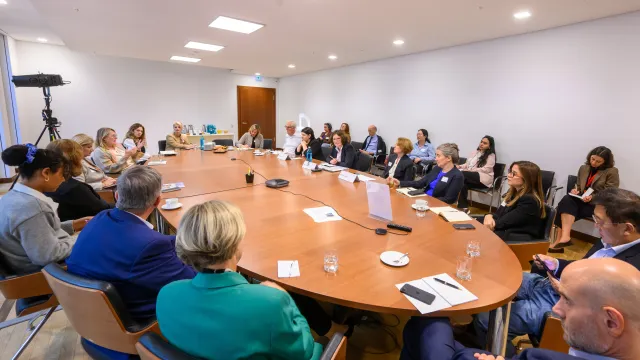
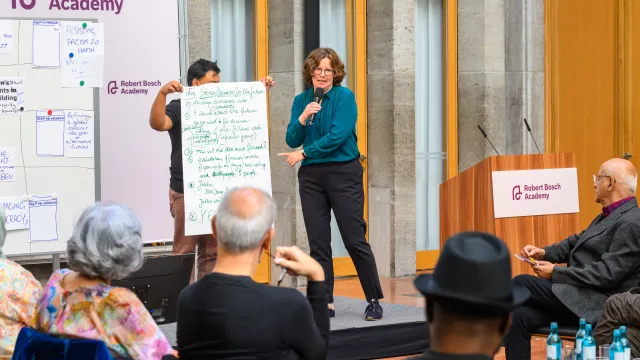
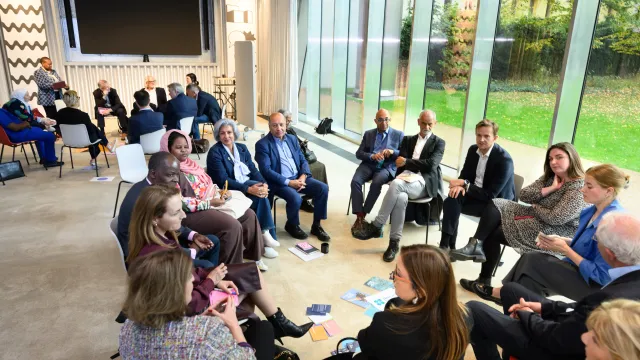
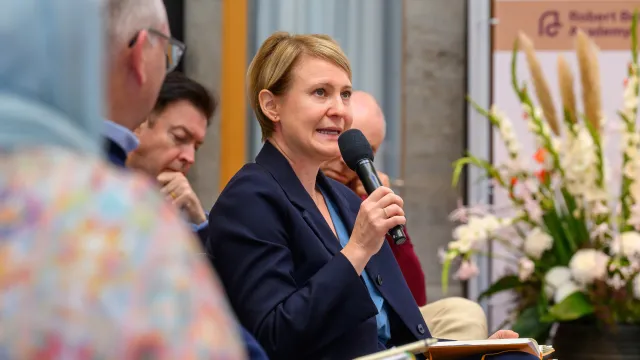
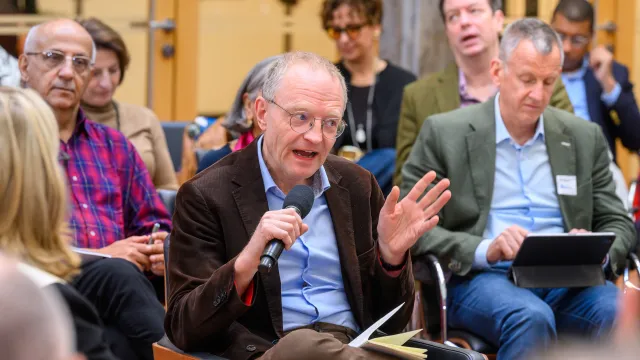
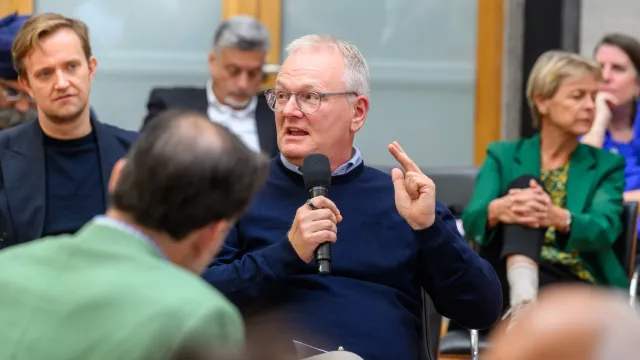
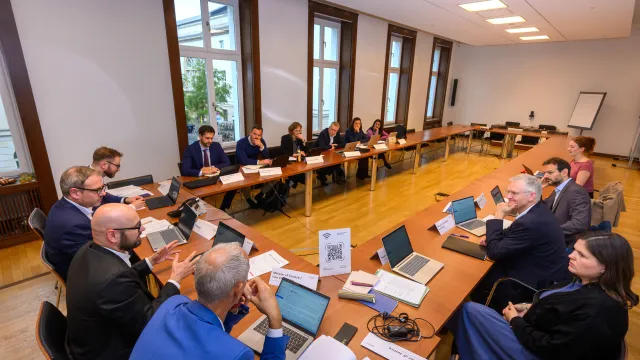
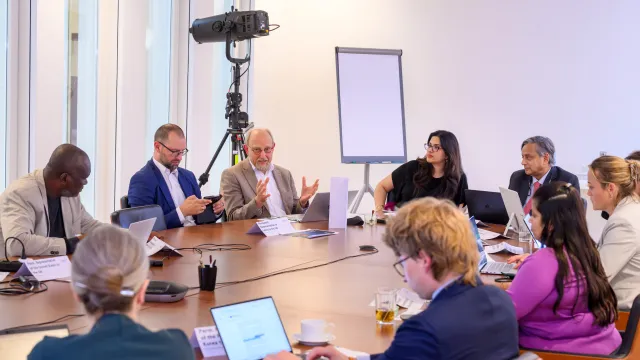
It provided a space for exploring complex questions through Academy Talks, Round Tables, and Panel Discussions.
What would it take for cities to obtain a relevant voice?
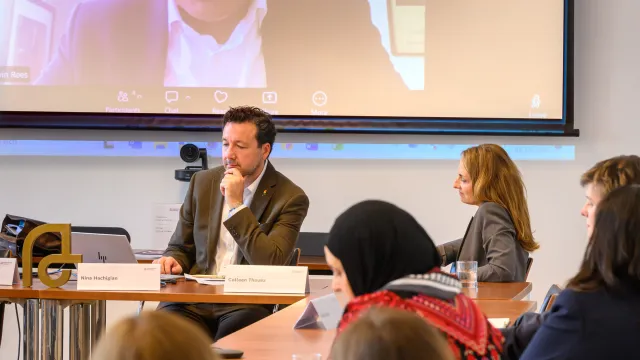
Cities are no longer passive settings for global events, but are now essential actors dealing with the direct consequences of issues like war, climate change, and migration. A Round Table led by Richard von Weizsäcker Fellow Colleen Thouez, Ambassador (ret.) Nina Hachigian, and Marvin Rees explored how to provide cities with the authority, resources, and security that match their growing importance.
The Unique Position of Cities: Cities are described as reactive, responsive, and credible because they govern by proximity to their citizens and are directly accountable.
Cities as Guardians of Democracy: In times when national institutions may be weakening, cities are seen as preserving the practice of democracy by demonstrating that democracy can deliver tangible results for people.
The Need for Institutional Representation: Cities need to have a formal voice in national and international forums like the G7 and G20. Since cities are the primary implementers of political decisions, their credibility and input are essential for effective policymaking.
Challenges and Vulnerabilities: These include a lack of agency and financial resources despite having increased responsibilities, the risk of becoming sites of massive social instability due to labor shortages and culture wars, and the need for structural reforms within municipalities.
International Solidarity and Action: International cooperation between cities, particularly through city-to-city partnerships such as those between German and Ukrainian cities are becoming more and more valuable. These partnerships provide direct aid, share knowledge on critical issues like AI and evacuation strategies, and build resilience.
The group proposed the following measures:
- Launch a campaign to ensure cities are represented at the G7/G20 summits.
- Establish a city democracy fund to support cities in experimenting with new forms of democracy and to protect mayors who are under threat.
- Create specific recommendations for the next UN Secretary-General on how to institutionalize the role of cities at the UN level.
How does post-war Europe look?
Richard von Weizsäcker Fellows Marija Golubeva and Natalia Gavrilița led a Round Table discussion on what Europe might look like if and when the war in Ukraine ends, highlighting key questions on geography, geometries, grudges, and guardrails.
"We need a clearer vision of what Europe wants to be after this war and that includes what relationships it has outside Europe," Golubeva said.
Geography: which parts of Eastern Europe will strengthen their belonging to the EU and which will de facto become a grey zone where Russia's influence will be either contested or uncontested? Will all of Ukraine or only its non-occupied territories become part of the EU? Will Moldova be part of the EU as well?
Geometries: what will the geometries of the new alliances constructed before the war ends be? What kind of defensive coalitions and other alliances built around common economic and political interests shall we see in Europe? Will these include Ukraine and the UK? Which EU countries may opt out of some alliances?
Grudges: which trends of (re)assigning blame for the hardships born during the war (economically, politically, and physically) will influence the relations between countries within Europe and between the population and elites within countries? Will any cases of lasting ressentiment be formed, not least within Russia (if it loses the war in the eyes of its own population) and in Ukraine (if it loses the war in the eyes of its own population)? What will the impact of these grudges be on European unity and solidarity?
Guardrails: what should the guardrails be for Europe's security and peaceful coexistence after the war? This includes the common European rules of engagement with Russia, to avoid return to "business as usual" on the one hand, and destructive strengthening of the ressentiment in Russia against Europe on the other hand. These may include support for peaceful transformation within Russia or containment of authoritarian Russia and preventing it from shaping a Europe divided into zones of influence. The guardrails should also include a new international architecture that would allow the European project to continue around its core values of fundamental rights and rule of law – which can no longer be safeguarded by the disintegrating liberal international order.
Can Africa and Europe build a partnership of equals?
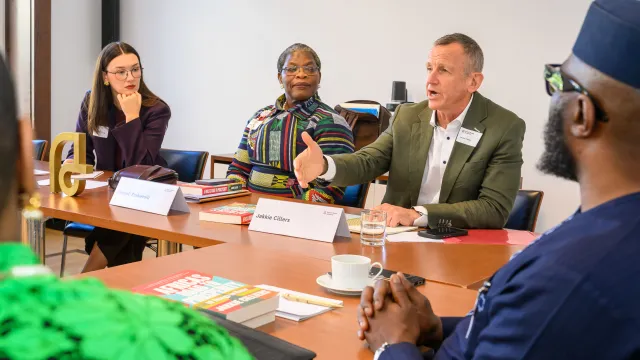
The post-colonial relationship between Africa and Europe is a story of missed opportunities, the result of Europe remaining stuck in its warped view of Africa and failing to understand its business case. "Africa is part of Europe's solution," said Richard von Weizsäcker Fellow Obiageli “Oby” Ezekwesili, who led a Round Table together with Fellow Jakkie Cilliers. "Policymakers should be following their data. Let your data tell you why you can't count Africa out."
Beyond practical arguments, these missed opportunities are also a failure of listening. One step in the right direction: boldly interrogating past histories of colonialism and slavery, and having honest conversations about a joint future.
How can we bridge differences in our societies?
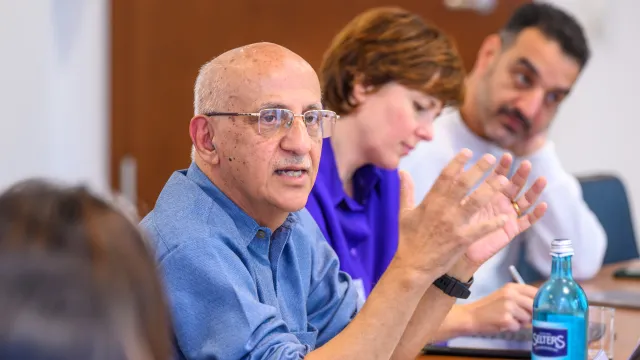
When societies approach migration as an opportunity, rather than a problem or a crisis to be solved, they are more likely to center belonging and become more resilient in the process. "Whilst legislation can ease the path to belonging through engagement and citizenship, the core of belonging is not transactional, but emotional," said Richard von Weizsäcker Fellow The Honourable Ratna Omidvar, who led a round table discussion on migration with Fellow Harsh Mander.
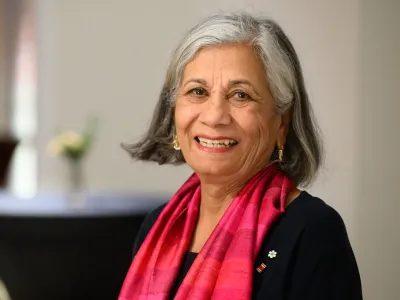
"Belonging is an intrinsic and essential element of identity."
"The chances that your neighbor is not going to look like you, dress like you, speak the language that you speak, are higher than ever before," said Mander. "We have the option of looking at this person so different from us with fear, resentment, and hate, or with curiosity, flexibility, with an invitation for equal belonging." Human beings should belong, he said, without conditionality.
This also extends to how partnerships work in the field: Immigrants are not problems for which you forge partnerships to solve, Mander said. Immigrants must be the partners.
How can democratic coalitions hold together?
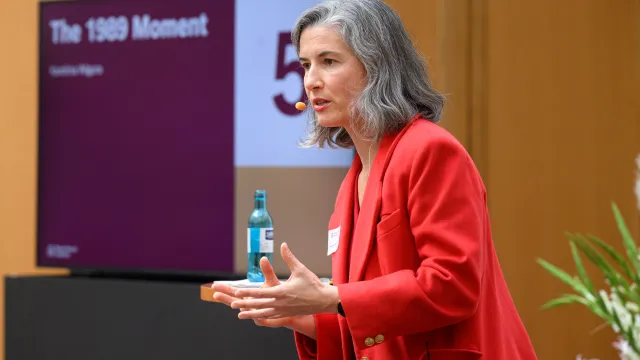
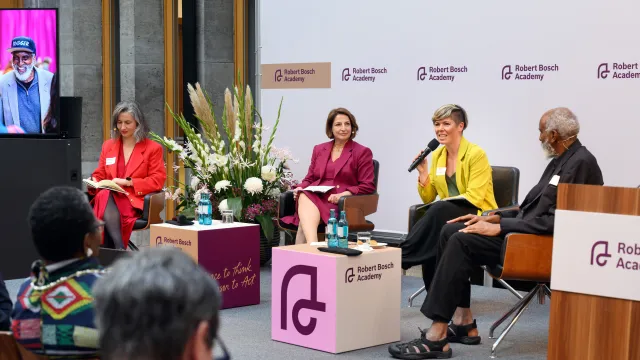
In their panel discussion moderated by Nataliya Novakova of the Civil Society Forum, Fellows john powell, Karolina Wigura, and Zsuzsanna Szelenyi explored the politics of resentment engulfing many countries today and strategies for how to break through to the other side. The three returned in different ways to the importance of helping people feel like they belong and feel heard.
Péter Magyar's success in Hungary's elections is only one recent example, Szelenyi explained. By combining traditional campaigning techniques – visiting small villages and listening to the concerns of local communities – with new technology, he allowed the entire country to feel united behind him, giving them a front row seat to people feeling heard.
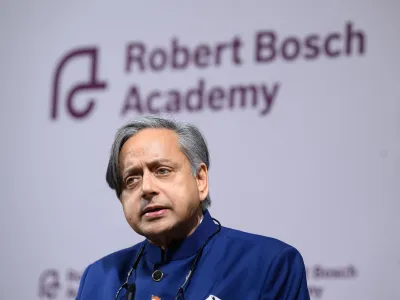
Academy Talks
Eight talks, eight minutes each. Academy Talks featured back-to-back speakers providing insight into often overlooked aspects of complex topics.
Can global solidarity reshape international cooperation?
A public townhall-style panel discussion went into the thinking behind the Global Solidarity Compact, which focuses not on what is broken, but on what changes are necessary, empowering decision makers to make them.
Richard von Weizsäcker Fellow Suma Chakrabarti addressed international development financial architecture. Both governments and civil society organizations in the Global North have shaped policy and institutions in a way that does not reflect the people they purport to serve and their interests, he said. To get the change we need, the Global South needs to come together to pressure these institutions to better match what they're doing with what is actually wanted by these countries and their people.
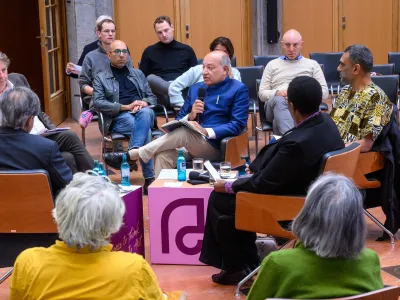
"Multinational development banks have become captured by Global North interests and don't necessarily reflect the priorities and policies of the Global South."
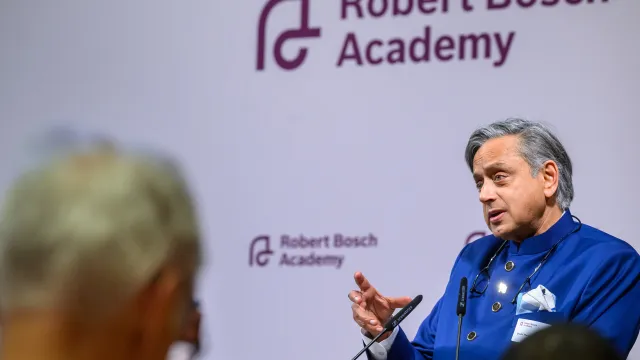
Shashi Tharoor explored whether meaningful reform is still possible from within the system. Many international institutions lack legitimacy and reflect the geopolitics of a different era. Making decisions that the world can endorse is hampered by lack of representation. After all, why would countries adhere to decisions that were made without them at the table?
What needs to happen to trigger reform of a system that is being abandoned by even those who built it? Tharoor asked. He called upon Richard von Weizsäcker Fellows to explore ways to bring this issue to responsible governments and explore what can and must be done.
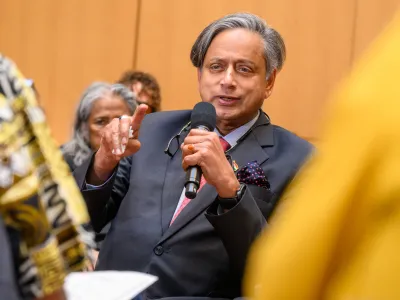
"The whole notion of common rules that everybody would uphold in the interests of our common humanity is being cast aside by the ones most responsible for propagating them."
Richard von Weizsäcker Fellow Lindiwe Sibanda reframed the question, asking instead who should change and where change should come from. She presented Africa as the world's future: by 2050 one in four people will be African; 65% of the world's arable land still sits in Africa unused. She called for redesigning the table before pressure forces us to do so.
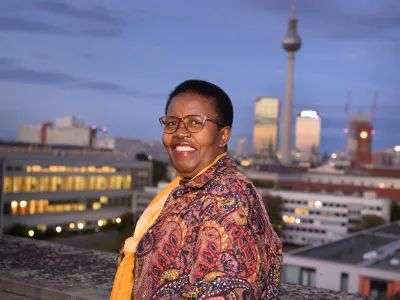
"There will come a time when all hell breaks loose. What do we do before we get there?"
In response, Richard von Weizsäcker Fellow Kumi Naidoo reflected upon his experience leading major international NGOs. Though he was recruited in order to address power imbalances between Global North and South in these organizations, actually having them accept this change was another matter. He agreed with Suma Chakrabarti's assessment that the Global South cannot expect for power to simply be given up voluntarily.
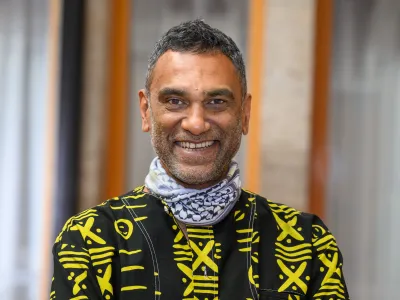
"It's one thing to recognize that something needs to change, especially that power needs to be given up. It's another thing to be able to give up power."
Richard von Weizsäcker Fellow Bert Koenders offered insight into what Europe needs to change. He emphasized that the rules themselves – international humanitarian law, state sovereignty, and so on – are not bad in themselves. However, Europe and the Global North require a new approach, relinquishing their monopoly on setting and interpreting these rules. He called for an international system that involves multilateral and plurilateral coalitions of the willing and underlined that Europe needs to better understand what these might be. The areas of AI, climate finance, business security, and the alleviation of inequality are areas which lend themselves to more pragmatic approaches based on international cooperation and fraternity.
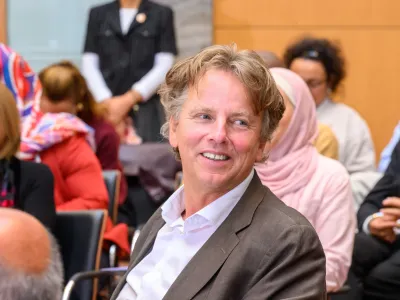
"Europe should share its power for common goals."
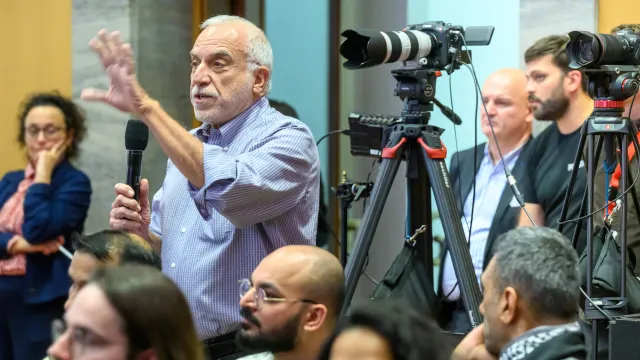
In the discussion that followed, the panelists were pushed to think beyond established analytical frameworks. "I still feel like we're in a pleading world," Indy Johar said. "Pleading for power. Pleading for justice. This is the moment to construct power. What is our theory of the construction of power?"
Richard von Weizsäcker Fellow Ratna Omidvar explored moving away from ideas of giving and gaining power, and towards sharing power. Richard von Weizsäcker Fellow Farhana Yamin highlighted the potential of turning to smaller, more agile formations, like communities, to foster more creative ways of thinking.
Richard von Weizsäcker Fellow Zenda Ofir pointed to the flawed narrative of "autocracy versus democracy," calling for a new way of describing the political decisions that result in good governance. Drawing upon her experience as a climate activist, Richard von Weizsäcker Fellow Nisreen Elsaim questioned whether speaking about power in the abstract was useful. Actors can claim power themselves and then define what kind of power that is. Richard von Weizsäcker Fellow J.P. Singh reminded the panel of the difference between power and influence and of the importance of having a constituency behind you when reaching out to those perceived to hold power.
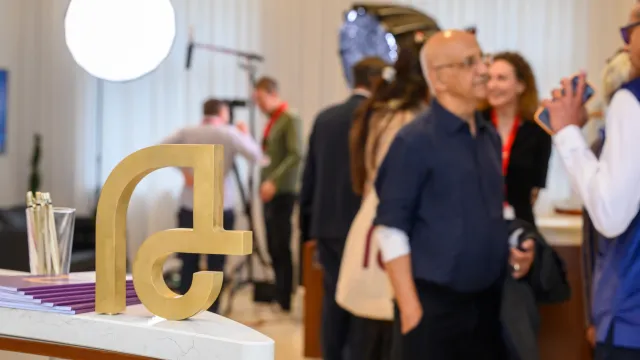
BarCamp
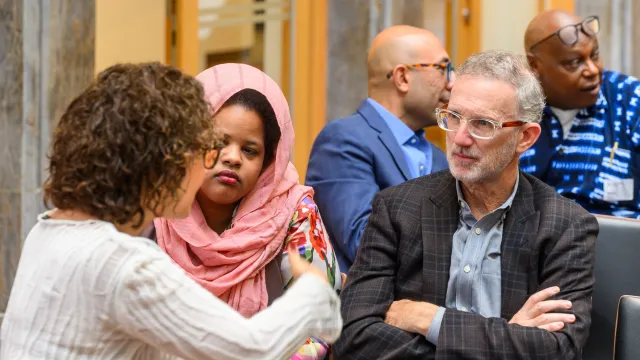
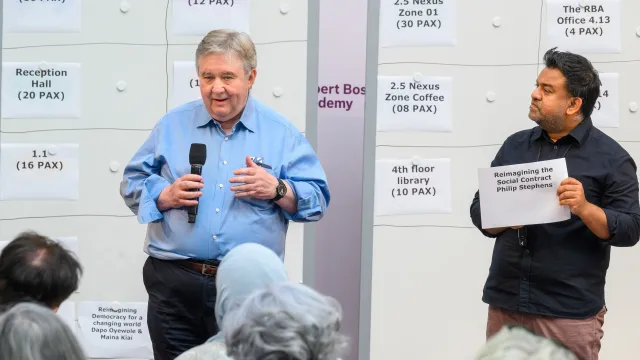
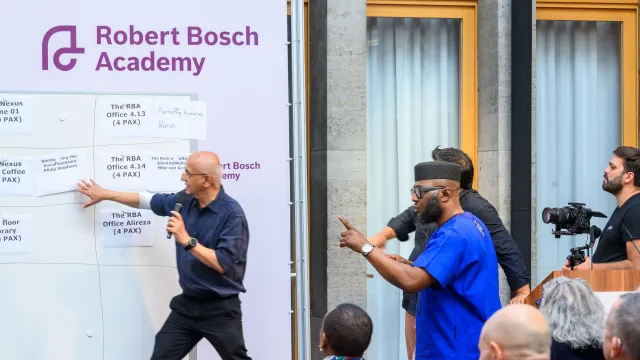
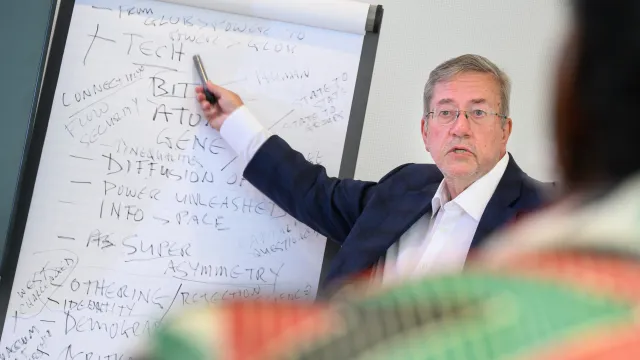
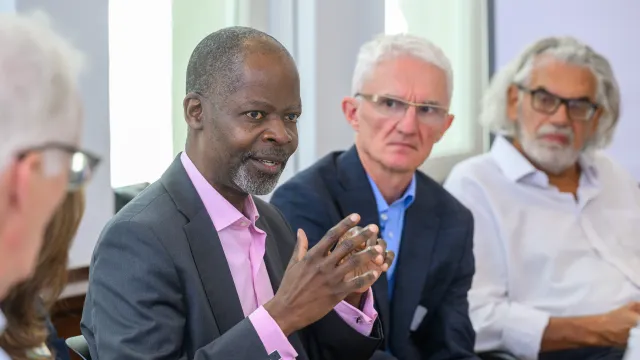
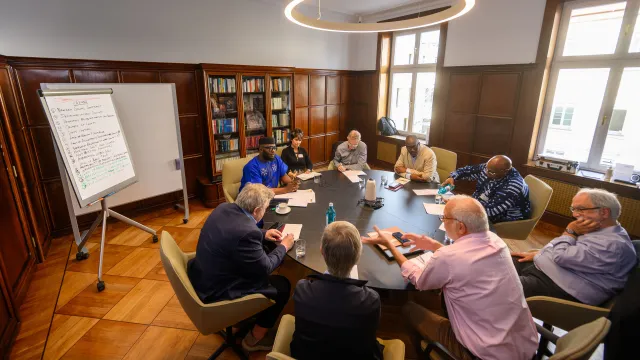
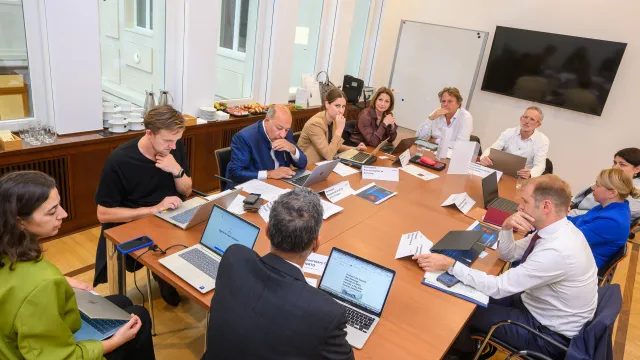
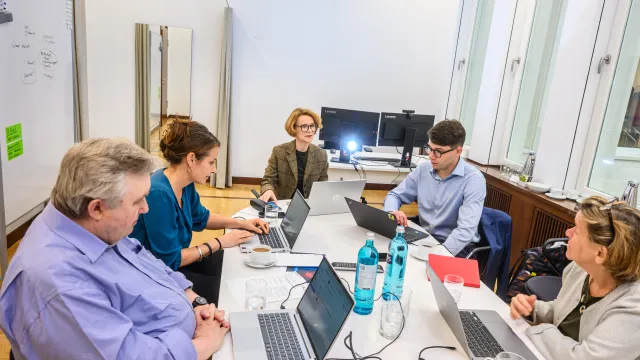
New formats, including a two-day BarCamp, fostered experimentation among Fellows. Fellows brought their own topics to the sessions, switching between groups and combining them as needed. Working Groups and next steps followed.
Backcasting future global scenarios
The group resulted in an effort that will compare the costs of the current global trajectory (which was loosely characterized as a trend towards a Divided World) with the gains to be expected in a Sustainable World. The latter could be equated with the ambition captured in the Global Solidarity Compact. In this manner they hope to add some hard projections on the associated costs and implications of the current drift towards fragmentation and even conflict. The impact of these two divergent pathways will be summarized using measures such as impact on extreme poverty, economic growth, inequality, carbon emissions, etc. The proposed forecast horizon is 2050.
Rather than trying to create new scenarios, the work will draw on the existing modelling done at the African Futures & Innovation on Global Power shifts.
Datalism, Big Tech, and Small Tech
Tech has the potential to serve the public good. The group explored various use cases covering a broad range of areas, including how to reduce police violence, expand education, and develop community health platforms.
These use cases and their implications will be further developed by the group in the weeks ahead. This work, together with reflections on Datalism from a development perspective from Richard von Weizsäcker Fellows Catherine Mulligan and J.P. Singh and a cooperation with universities in Kenya led by Fellow James Shikwati, may then form the foundation for a forthcoming workshop with other Fellows.
Resisting Fascism 2.0
Our response to hate, fear, and despair must be steeped in a new language that communicates what we are for – not only what we are against.
This group structured their discussion in six parts:
- Bearing witness to the hate and fear that exists all around us
- Diagnosis: How did we get here?
- Seeing and listening to the anxieties and concerns of those we disagree with
- Exploring a radical new imagination for our collective futures to fight for our humanity. What do we want to build?
- Finding a new language: Moving away from words like "pluralism," "multiculturalism," and "tolerance," and drawing upon art and poetry to explore how to communicate differently and more effectively
- Communicating the beauty of shared belonging, accepting difference, pluralism, and living together with respect and care
Reimagining democracy and the social contract
Democracy is flawed. Its promise is not being delivered in a way that is inclusive and truly serves all; electoral processes do not select the best to lead the rest. How do we rebuild the social contract so that accountability and inclusion are at the core?
This working group brainstormed the issues – from the outsized role of corporations in politics to the emphasis on power and control over service – and then explored what needs to change. These included, among other things:
- Bolstering the "care economy"
- Deepening mechanisms for listening to facilitate community-based planning
- Rethinking political parties so that they reflect the realities of this moment
- Merit-based governance
- Reimagining electoral processes so that the best of us lead the rest of us
- Fostering constitutional inclusion and voting rights of women and minorities
Future activities may include blog posts or online events that invite audiences with differing opinions to provide their perspectives on how to reimagine democracy.
Strengthening international cooperation through a global solidarity compact
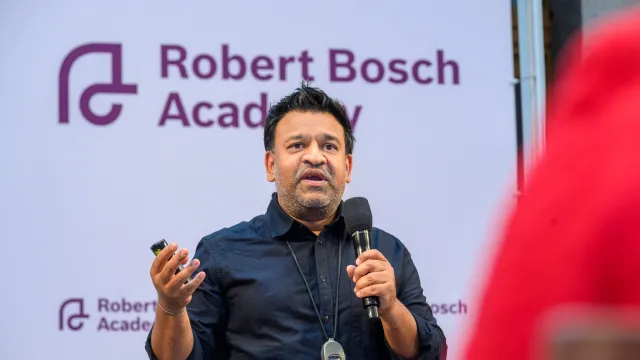
Richard von Weizsäcker Fellows joined together to draft a joint statement outlining principles of global solidarity. The group's BarCamp session served to internally introduce the Declaration to the Richard von Weizsäcker Fellows and explore possibilities for engagement and dissemination.

Germany Today
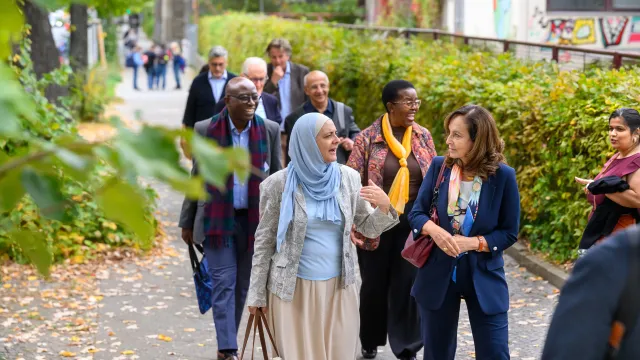
The Richard von Weizsäcker Forum develops deep connections between leaders from all over the world and different parts of society in Germany and Berlin. This year, local policymakers, members of the Bundestag, and experts from Germany's think tank and business sectors helped Fellows understand where Germany is today and where it is headed.
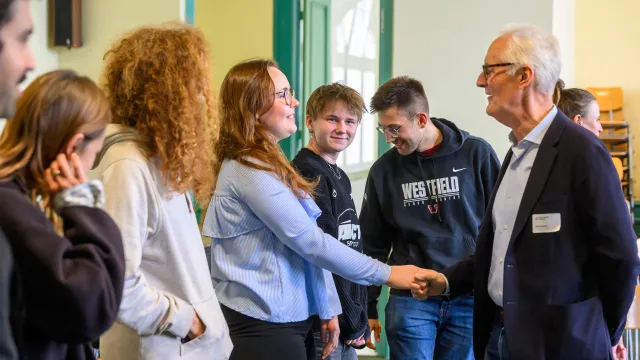
There is much to be concerned about. But there is also cause for hope. Fellows visited the Charité-Universitätsmedizin Berlin, Publix, and a school in Friedenau. Richard von Weizsäcker Fellow Kwame Akyeampong, who attended the school visit, saw a side of Germany he hadn't expected. "Seeing how that school was practicing and demonstrating inclusivity was very inspiring," he said. "It gave me a vision of Germany, which was very positive. I feel like I'm leaving the Forum with some light in my heart."
In the Germany Today panel, experts from policy, civil society, and business offered Fellows important insights that went beyond the headlines. Some key takeaways:
- As Germany struggles to cope with the rupture of the liberal international order, it is looking to and learning from countries in the Global South on how to deal with rupture.
- German society is deeply divided on Russia, not least because of the two different foreign policy identities of the east and west.
- Democratic parties must unite around a common cause that goes beyond trying to keep the right out of power.
- Civil society is the pre-political space and requires a new relationship with the state.
- We need movements, not parties.
Hybrid Threat Simulation
If Germany were the target of coordinated hybrid attacks, how would it and its allies respond?
Together with Meleys and the Global Public Policy Institute (GPPi), policymakers, diplomats, and security experts came together to find out. The exercise featured teams simulating the German National Security Council, NATO, and the UN Security Council. Key lessons include:
- Communication is key in a crisis situation. If you don't own the information space, someone else will.
- To expect a different result, countries might consider moving away from responding the way bad actors predict they will.
- Decision making is too siloed and more data sharing and exchange across ministries and offices is needed.
- Deterrence and escalation are often conflated.
The exercise helped prepare decision makers by showing them where weak points exist in our decision making processes.
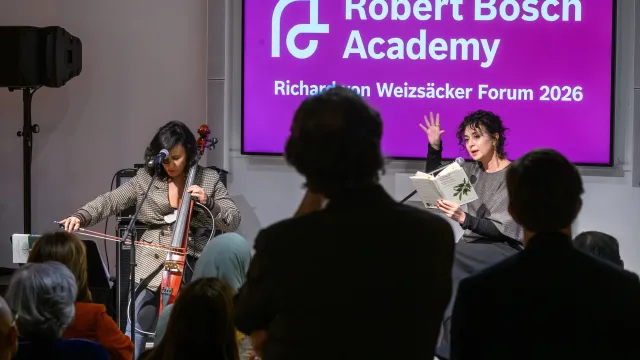
“We all lose our homeland, one way or another. We all become homeless. Our homeland is taken from all of us,” Richard von Weizsäcker Fellow Ece Temelkuran says in her latest book, Nation of Strangers: Rebuilding Home in the 21st Century.
With poetic sensitivity and analytical acuity, Temelkuran describes the loss of home as one of the most fundamental experiences of our time. To her, home is not just a place, but also the moral, political, and cultural framework of our coexistence, a framework that is becoming increasingly unstable.
Following the successful production at the Neuköllner Oper in June 2026, Temelkuran revisited her text for an adapted version at the PalaisPopulaire. Weaving Temelkuran's reading together with a musical performance by Nesrine Belmokh, the two explored experiences of alienation and searched for a moral, political, and physical home in our restless present – a possible "Nation of Strangers."