-
Image
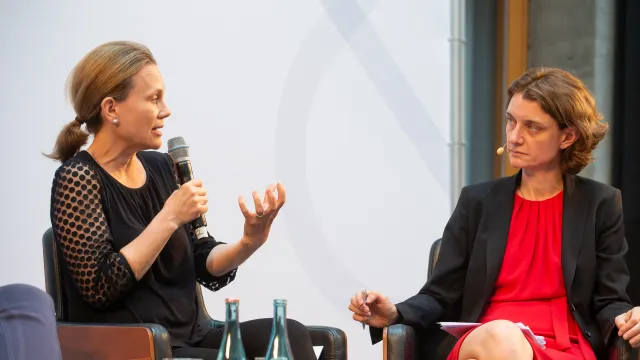
“On the U.S. side of the Atlantic there is some sense of relief when looking at the European election. While there is a lot of change, Americans that do track EU issues look at the results and think the EU center is holding.” Julianne Smith -
Image
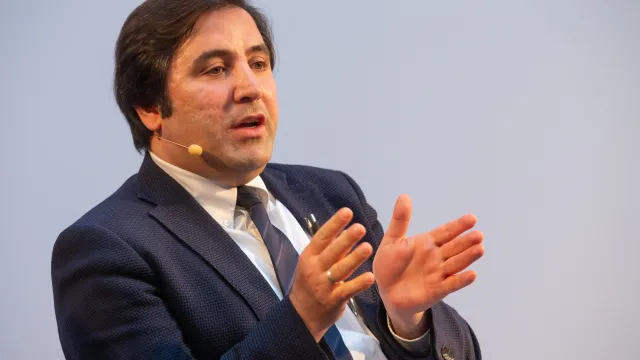
"No region has been as crucial in the making of the current Middle Eastern state system as Europe has been." Galip Dalay -
Image
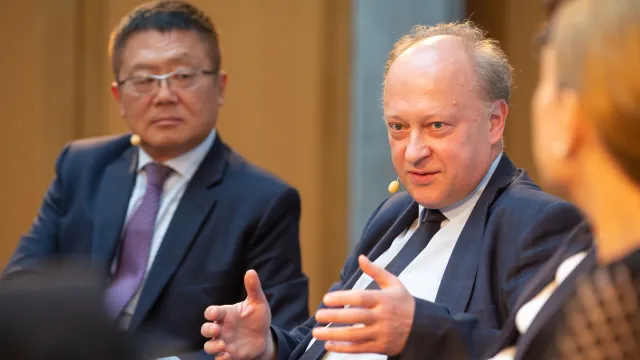
“If the Kremlin is serious about its vision of the multipolar world, Europe can become one of those poles only if it is strong; only if it represents an independent power.” Andrey Kortunov -
Image
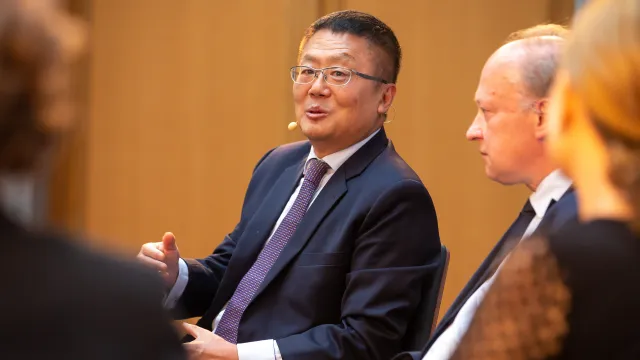
“For the Chinese government, a prosperous, stable, and strong Europe is good, because a more independent Europe is good news in the wake of China-US competition and rivalry.” Huang Jing
What are conflicting interests with other non-European regions and how can the EU (re)develop the strength to play an active role in foreign affairs? What are the expectations of the MENA region, China, Russia and the U.S. towards future relations with the EU?
These and other questions have been discussed during our debate with Galip Dalay, research director at Al Sharq Forum, Huang Jing, professor and dean of Institute of international and regional studies at Beijing Language and Culture University, Andrey Kortunov, director general of the Russian International Affairs Council, and Julianne Smith, former deputy national security advisor to vice president Joseph Biden. The discussion was moderated by Daniela Schwarzer, director of the German Council on Foreign Relations.
Listen to the full debate: