Festival of Ideas
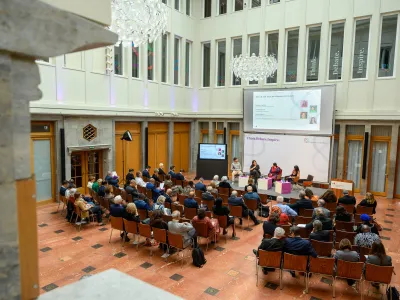
Academy Talks
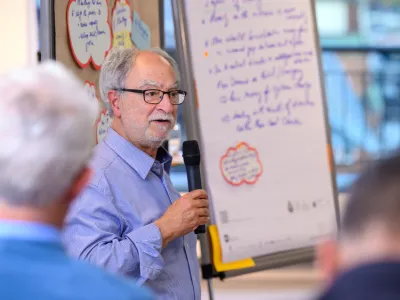
Round Tables
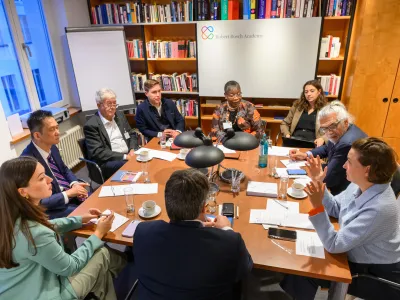
Panel Discussions
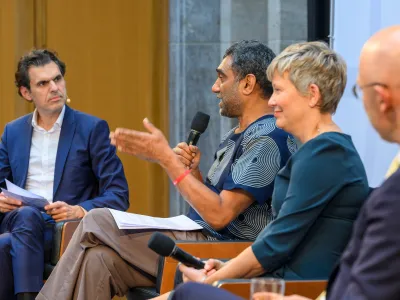
How can we build partnerships across borders and divides? This question guides this year’s Festival of Ideas at the Robert Bosch Academy.
The festival opens the Academy’s Richard von Weizsäcker Forum, welcoming the public to the Robert Bosch Stiftung at Französische Straße 32 in Berlin. Academy Talks, panel discussions, and round tables offer opportunities to engage directly with international experts.
Under the theme Forging Partnerships and Building Alliances, join around 100 international leaders from politics, academia, culture, business, and civil society to challenge assumptions and explore cooperation across divides. We look forward to welcoming you.
The next questions: What are the questions we need to ask?
Eight talks, eight minutes each. Join us for back-to-back speakers as they provide insight into often overlooked aspects of complex topics.
The World through Beijing’s EyesHuang Jing ____ | Rather than focusing on China's day-to-day policy decisions, this Academy Talk will explore the strategic ideas, political priorities, and historical experiences that shape how Beijing sees the world. How does China understand the evolving international order? Which assumptions drive its approach to competition, cooperation, and global influence? What are Western policymakers and partners most at risk of misunderstanding? |
Unboxing Russia: Myths and Misconceptions to AvoidEkaterina Schulmann ____ | Looking beyond the Kremlin's day-to-day decisions and past a Western/European lens, this Academy Talk will examine the political and institutional dynamics inside Russia that are likely to shape its future trajectory. What developments inside Russian society and the state deserve greater attention? Which trends are most likely to influence Russia's behavior abroad? And what are Western observers still missing? |
The 1989 MomentKarolina Wigura ____ | 1989 once held out the promise of freedom and a better future for all. It loomed large as an economic, political, and moral vision. But like every revolution in human history, it fell short of its aspirations. This Academy Talk will tackle the question of whether the current political turmoil is the result of this failure. Is it possible to recreate the momentum of 1989? What can democracies contribute to freedom? Can a better future be promised? |
The Future of US Strategic Partnership and AlliancesCathryn Clüver Ashbrook ____ | What are the strategic questions policymakers, scholars, and future leaders should be asking now? Which assumptions about America's role in the world are likely to prove outdated? What emerging developments will shape the next decade of US alliances and partnerships? And what strategic choices made today will matter most for America's ability to compete and cooperate in the future? Rather than taking stock of the present moment, this discussion will look ahead. |
Technology as a Public GoodCatherine Mulligan ____ | We tend to think of AI as a story about technology. But underneath it lies a more fundamental transformation in how economic value and power are created. In this short talk, Catherine Mulligan introduces datalism as an emerging economic logic built around these dynamics. She asks why so much of the value generated from our activities accrues not to the people and organizations that generate the data, but to those who control the infrastructures and capabilities that refine and use it. She then connects this question to the wider data sustainability challenge of creating new ways of organizing, coordinating, and sharing value. Realizing that potential in the age of AI will depend on our answer to a broad question: what new partnerships and alliances will we need if the benefits of our digital future are to be shared rather than simply captured? |
Beyond Carbon: Building the Partnerships to End the Fossil Fuel EraKumi Naidoo ____ | The fossil fuel crisis is often framed primarily as a climate problem, but that framing is too narrow for the political and economic challenges we face. Fossil fuels sit at the intersection of multiple systems of harm: climate breakdown, war and militarism, public health, debt, inequality, democratic capture, Indigenous dispossession, and geopolitical dependency. This means that a successful phase-out cannot be delivered by climate policy alone, nor by governments acting in isolation. It requires multilayered partnerships across states, cities, communities, workers, researchers, financial institutions, civil society, cultural actors and movements for peace, justice and human rights. The deeper task is to build a shared political project capable of addressing not only carbon emissions, but the structures of power and dependency that sustain fossil fuel extraction. The opportunity before us is therefore larger than an energy transition: it is to connect constituencies that have too often worked separately and build the social and political power required for a fast, fair, and funded phase-out. The climate movement cannot win this struggle alone, because the struggle was never only about climate. |
The Evolution of Us: Trust, Diversity, and the Power of CollaborationRana Dajani ____ | What makes human cooperation possible? As a molecular biologist, Rana Dajani draws on human evolution to explore three interconnected ideas: collaboration, diversity, and trust. Many of today’s global challenges – including climate change, environmental destruction, resource depletion, conflict, and rising authoritarianism – reflect systems built around division, competition, and domination. By reconnecting with our innate capacity for collaboration, trust, and respect for diversity, we can build stronger partnerships and alliances and create a more resilient, sustainable future for humanity. |
Can we build Belonging without Othering?john a. powell ____ | If the attack on liberal institutions is coordinated, what would a response at the same scale even look like? In this Academy Talk, john powell will argue that illiberalism is not the problem. It is a nefarious response to the failure of liberalism to meet the problems of this century: the environment, technology, demographic change. Naming the response rather than the failure is part of why we keep falling short. How can Europe, and Germany in particular, contribute without falling prey to a northern and myopic hubris? Meeting this moment will take a bold effort, grounded in a universal idea of belonging without othering, and willing to rethink both North-South relations and the role of the state. The narrative around that work has to be co-created. What would we each have to change to become useful to a future none of us can meet alone? |
Speakers
-
Image
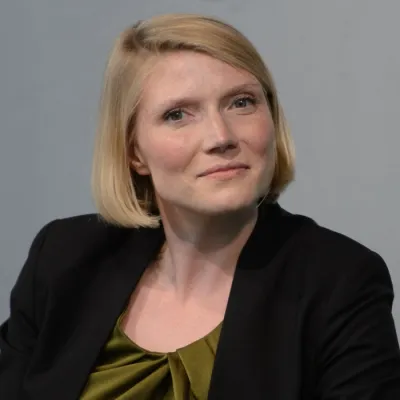 Cathryn Clüver Ashbrook
Cathryn Clüver Ashbrook is a German-American political scientist and Executive Vice President at the Bertelsmann Stiftung. She previously served as Director and CEO of the German Council on Foreign Relations (DGAP) and founded the Future of Diplomacy Project at Harvard Kennedy School. Her expertise covers transatlantic relations, technology policy, and diplomacy.
-
Image
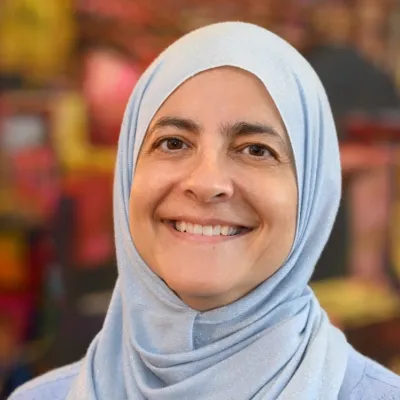 Rana Dajani
Rana Dajani is a molecular biologist, social entrepreneur, and Professor of Biology at the Hashemite University in Jordan. She is the founder of We Love Reading, a grassroots initiative that fosters a lifelong love of reading in underserved communities. Her work links science, education, and social change.
-
Image
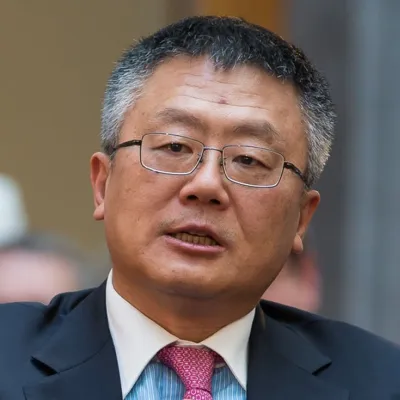 Huang Jing
Huang Jing is Professor and Director of the Institute of the U.S. and Pacific Studies at Shanghai International Studies University. He previously held professorships in Beijing and Singapore. His research covers Chinese foreign policy, US-China relations, and Asia-Pacific security.
-
Image
 Cathy Mulligan
Cathy Mulligan is an expert in digital technology and the digital economy, known for her work on blockchain, telecommunications, and sustainable development. She has held research posts at Imperial College London and advised the United Nations on digital cooperation. Her focus is digital sustainability and how value is distributed in data economies.
-
Image
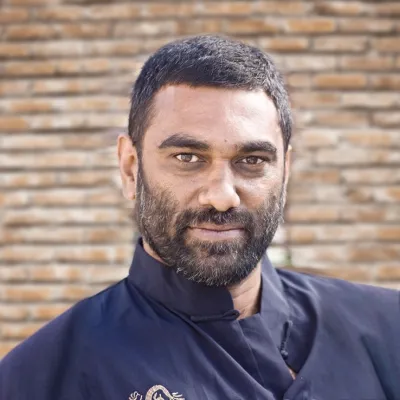 Kumi Naidoo
Kumi Naidoo is a South African human rights and environmental justice activist and President of the Fossil Fuel Non-Proliferation Treaty Initiative. He was the first person from the Global South to lead Greenpeace International and later served as Secretary General of Amnesty International. He began his career as an anti-apartheid organizer.
-
Image
 john a. powell
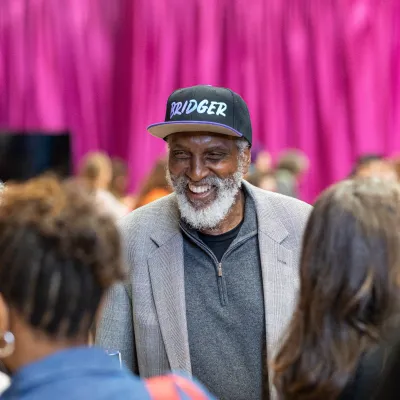
john a. powell is a law professor and Director of the Othering & Belonging Institute at the University of California, Berkeley. Born in Detroit, his experience of poverty and segregation shaped a career advocating human rights, equality, and diversity. He argues that bridging narratives are essential to countering the authoritarian challenge to democracy.
-
Image
 Ekaterina Schulmann
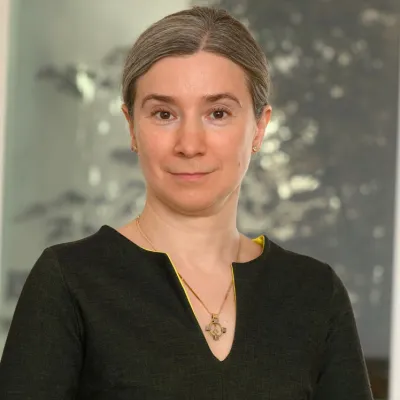
Ekaterina Schulmann is a political scientist specializing in the legislative process in modern Russia, parliamentarism, and decision-making in hybrid political regimes. She is associated with the Carnegie Russia Eurasia Center in Berlin and teaches at the Freie Universität Berlin. She is a widely followed commentator on Russian politics.
-
Image
 Karolina Wigura
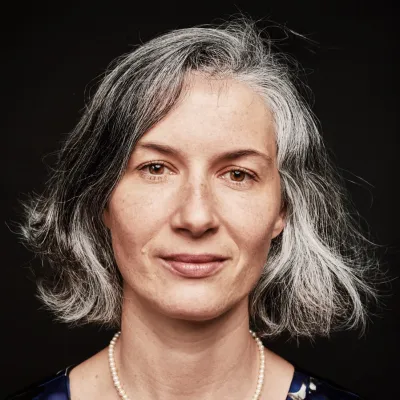
Professor Karolina Wigura is an academic and author. She is Associate Researcher at the Oxford School of Global and Area Studies.