Worldwide the number of inner state conflicts rise. Its implications affect regional but also global structures and power relations, in particular the relations between different ethnic or religious groups. Israel is an example which illustrates the challenges of a peaceful coexistence between the Jewish majority and the Arab minority. In order to improve the situation in Israel, Mohammed Darawshe and his organization Givat Haviva aims to build an inclusive, socially cohesive society in the country. Currently Richard von Weizsäcker Fellow at the Robert Bosch Academy, Darawshe designed a workshop that took place in the Berlin Representative Office of the Robert Bosch Stiftung. During his Fellowship the expert on Jewish-Arab relations is looking at different models of majority-minority-relations in Europe in order to test their applicability in Israel. The result was the workshop “Shared Societies – Approaches to Minority Related Issues in Europe and Israel” which brought together 50 European and Israeli experts. The findings of it will be included in a roadmap for a “shared society” in Israel.
Chances and challenges of strong minorities
The discussions among the European experts revealed different standards of national and international law in Europe and of guaranteed rights in constitutions. It elucidated why the claim of minorities to preserve their own ethnic and cultural identity, their language and traditions is also challenging the majority - it causes anxiety and resistance. „Like in Israel with its Arabic minority of 20 percent who demand equal access to labor market, infrastructure and economy“, remarks one of the Israeli experts.
Abstract state interests versus individual experiences
„This is exactly how politicians on a line of defense argue“, says Boriss Cilevičs, member of the Latvian National parliament and former chair of the Sub-Committee on Rights and Minorities of the Parliamentary Assembly of the Council of Europe, by mentioning all ifs and buts empowerment of minorities provokes, especially in conservative societies.
Juli Tamir, former education minister in Israel and co-founder of the Israeli peace movement, contradicts this argumentation. Out of an individual perspective the process is a gain for everyone and empowerment of the structural weak does not mean losing power for the majority but winning new perspectives. That forms a different social reality, endorses Francesco Palermo, professor for comparative constitutional law at the School of Law, University of Verona and member of the Council of Europe’s Advisory Committee on the Framework Convention for the Protection of National Minorities: „The more a society is celebrating its diversity the more minority issues become an enrichment instead of a danger or a threat for society. “
Same, same but different
Constitutional and ethnic discourses are reflected by panel experts and participants from science, politics and conflict management. Among others models from Switzerland, Latvia or the Balkans are presented to identify special characteristics of every case, but also similarities that could function as common knowledge in shared societies. “Surprisingly there are déjà-vue-moments“ one participant states, „whether to find them in South Africa, Kosovo or Israel.“
Roadmap to a „shared society“
While the first day was dedicated to comparing European experiences and models, Darawshe challenged the European experts on the second day by asking for a feedback on the Israeli situation that was presented by Arabic and Jewish participants from Israel. Many questions arose out of the discussion: Are human rights an issue in Israel when talking about majority-minority-relations? Can the Israel-Palestine-conflict be left out when tackling minority issues within Israel? And how to deal with conflicting narratives?
The group from Israel leaves Berlin with the notion that the conflict in their country is not that unique as they thought it was. They go back to Israel with plenty of suggestions on how they could transfer their ideas into a political agenda. „Don’t be too optimistic“, the European colleagues warn regarding the worldwide trends of growing inner state conflicts. Answering smilingly, Darawshe reveals a catching optimism: „Only alive fishes swim against the stream.“
Statements of the participants
Mohammad Darawshe on national minorities:
Mohammad Darawshe on the workshop:
Ulrich Weinbrenner, Head of Directorate "Social Cohesion and Integration" at the Federal Ministry of the Interior, on the exchange with the participants:
Ulrich Weinbrenner on the work of the Federal Ministry of the Interior:
-
Image
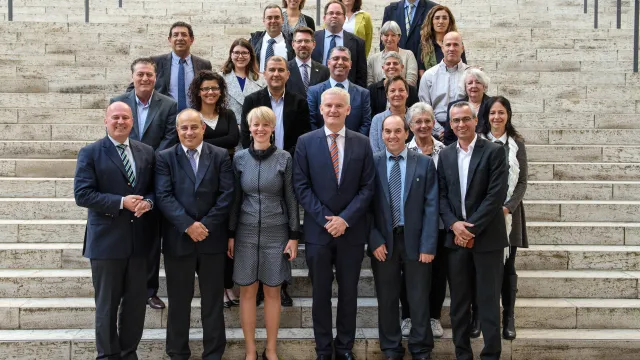
Die israelische Delegation mit den Sprechern des Bundesinnenministeriums -
Image
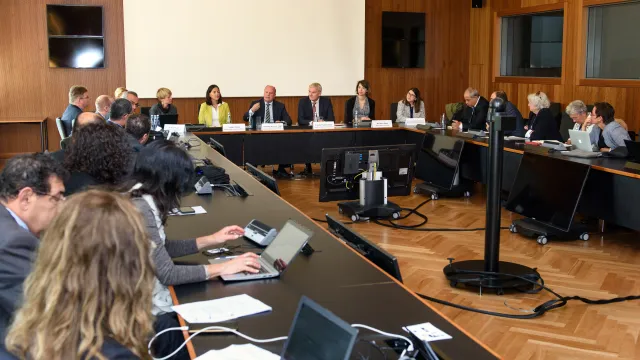
Am ersten Tag gaben Hartmut Koschyk (Beauftragter der Bundesregierung für Aussiedlerfragen und nationale Minderheiten), Ulrich Weinbrenner (Leiter des Stabes Gesellschaftlicher Zusammenhalt und Integration im Bundesinnenministerium) und Judith Walde (Leiterin des Minderheitensekretariats der vier autochthonen nationalen Minderheiten und Volksgruppen Deutschlands) eine Einführung in Minderheitenfragen und Integration in Deutschland und diskutierten aktuelle Herausforderungen mit den Teilnehmern aus Israel. Die Diskussion wurde von Barbara Hust (Projekt Manager an der Robert Bosch Academy) moderiert. -
Image
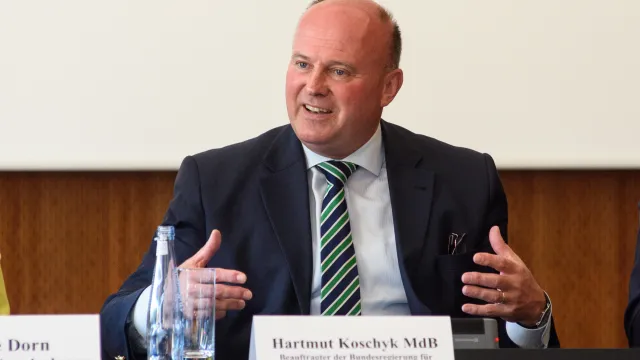
Hartmut Koschyk -
Image
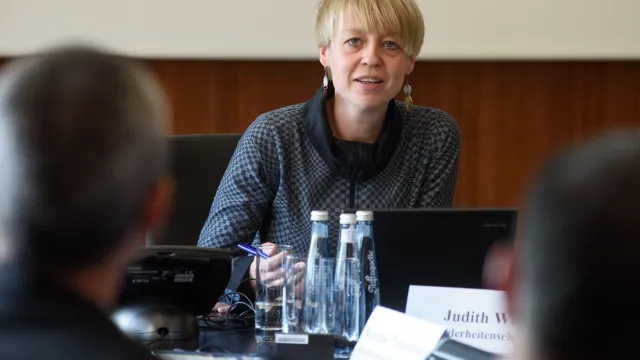
Judith Walde -
Image
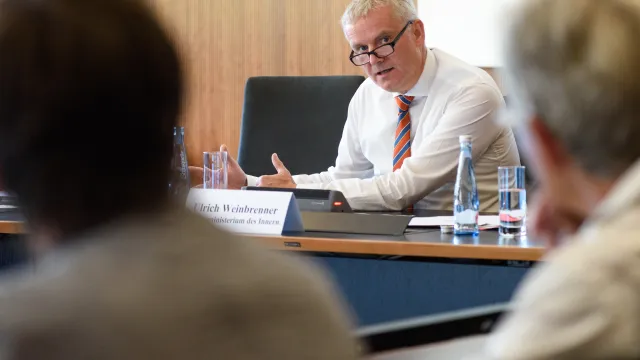
Ulrich Weinbrenner -
Image
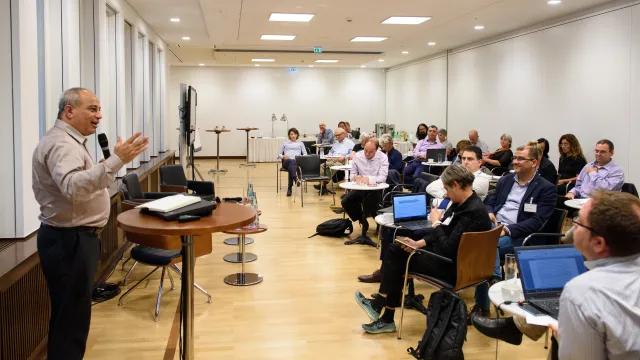
Mohammad Darawshe begrüßt die israelischen und europäischen Teilnehmer zum Workshop @Academy -
Image
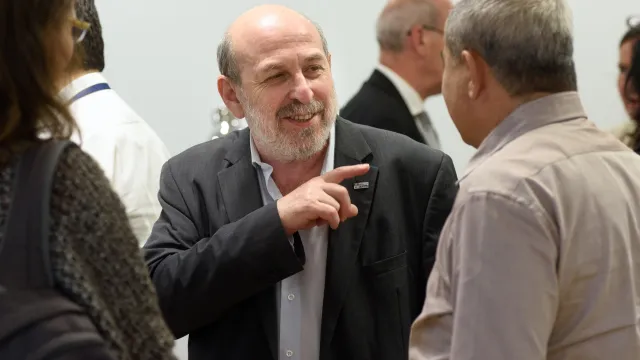
Teilnehmer des Workshops -
Image
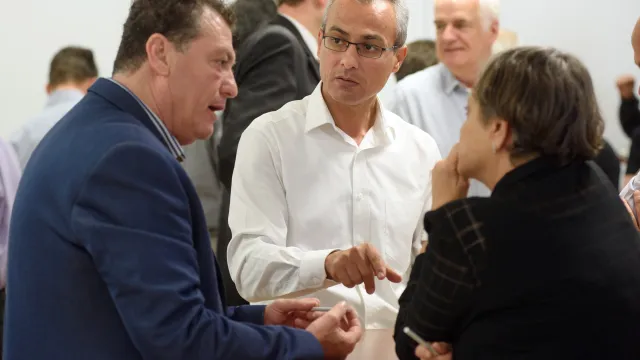
Teilnehmer des Workshops -
Image
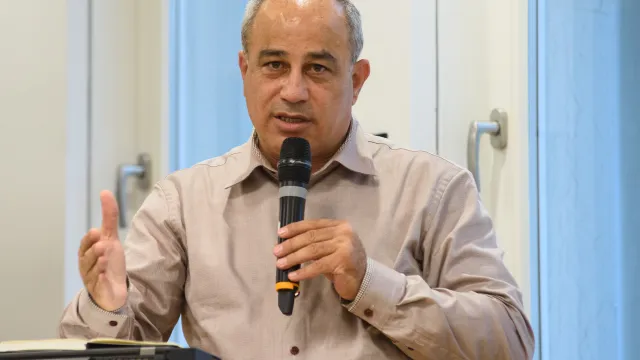
Mohammad Darawshe -
Image
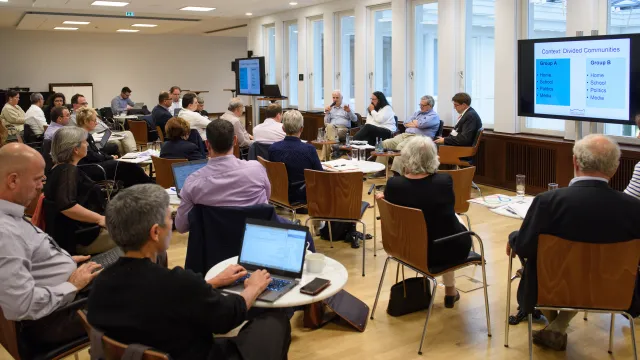
Paneldiskussion mit europäischen Experten -
Image
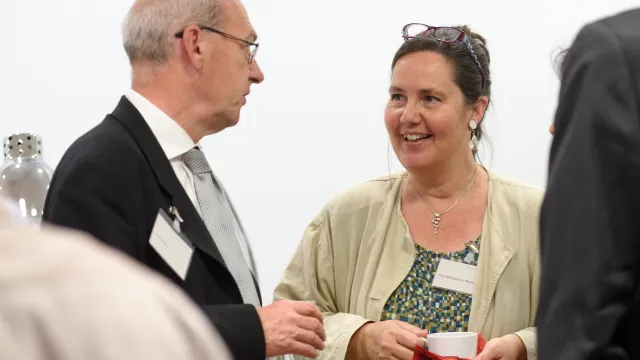
Teilnehmer des Workshops -
Image
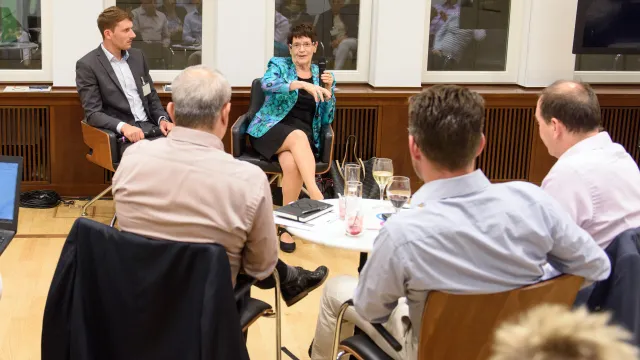
Am letzten Abend teilte Rita Süssmuth, ehemalige Präsidentin des Deutschen Bundestages, ihre Erkenntnisse und Sichtweisen zur aktuellen Flüchtlingssituation in Deutschland. Diese Diskussion wurde von Jannik Rust, Senior Projekt Manager der Robert Bosch Academy, moderiert. -
Image
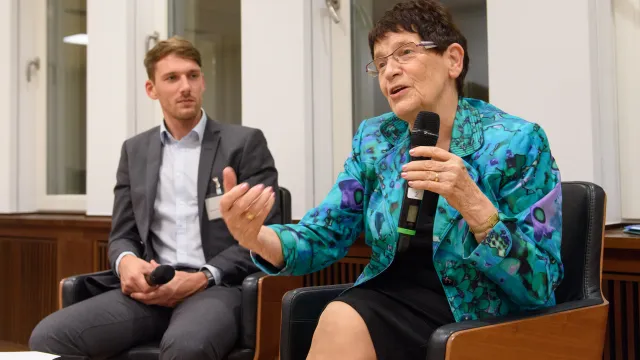
Rita Süssmuth