The Next Question





In the first episode of The Next Question, the Robert Bosch Academy's new podcast, Pradnya Bivalkar interviews political scientist Ivan Krastev and historian Anne Applebaum about the future of Europe in a world where the assumptions that guided it for a generation are no longer valid.
Watch the full episode, learn about the guests and host, and read the transcript below.
The Next Question on Europe: Watch the full episode
Meet the Guests: Anne Applebaum and Ivan Krastev
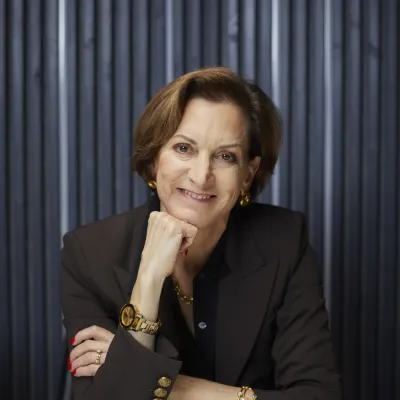
Anne Applebaum
Historian, Journalist
Anne Applebaum is a historian and a staff writer at The Atlantic, and won the Pulitzer Prize in 2004 for Gulag: A History. At the SNF Agora Institute and the Johns Hopkins School of Advanced International Studies, where she is a senior fellow, she co-directs Arena, a program on disinformation and twenty-first-century propaganda. Her recent books, Twilight of Democracy and Autocracy, Inc., examine why authoritarian politics became attractive again in societies that assumed they were past it, and how today's autocracies cooperate across ideological lines. She received the Peace Prize of the German Book Trade in 2024.
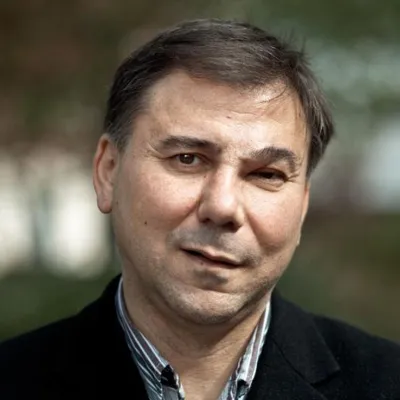
Ivan Krastev
Chairman, Centre for Liberal Strategies
Ivan Krastev is a political scientist who chairs the Centre for Liberal Strategies in Sofia and holds the Albert Hirschman Permanent Fellowship at the Institute for Human Sciences in Vienna. His books include After Europe and, with Stephen Holmes, The Light that Failed, an account of how the post-1989 demand that the East imitate the West produced its own backlash; it won the Lionel Gelber Prize in 2020. He writes regularly on European politics for Foreign Affairs and is a contributing editor at the Financial Times.
Meet the Host: Pradnya Bivalkar
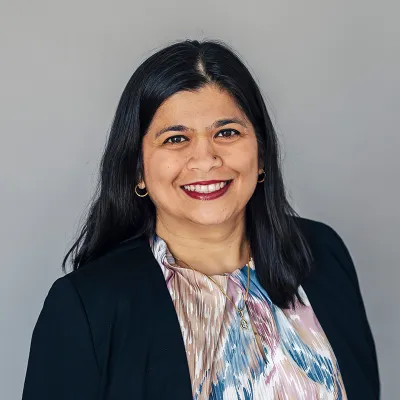
Pradnya Bivalkar
Senior Project Manager
Pradnya Bivalkar is Senior Project Manager at the Robert Bosch Academy in Berlin and works with the Richard von Weizsäcker Fellows. Her areas of work include Identity Conflicts, Political Systems, Modern India, and the Global North-Global South Dynamic. She has hosted the Academy's podcast since January 2023, first as Think. Debate. Inspire. and now as The Next Question.
Transcript of conversation with Anne Applebaum and Ivan Krastev
Pradnya Bivalkar: For much of the post-Cold War era, Europe operated with a remarkable degree of certainty. The continent was shaped by assumptions that many people came to regard as permanent: that peace would endure, that economic interdependence could reduce conflict, that democracy would continue to expand, that globalization would deepen, and that Europe's place in the world was relatively secure.
Today many of those assumptions are being challenged. Russia's war in Ukraine, geopolitical competition, technological disruption and democratic pressures have transformed Europe's environment in ways that would have been difficult to imagine only a decade ago. So perhaps the question is no longer how Europe responds to the next crisis, but what kind of Europe is needed for a world that is becoming more uncertain, more fragmented and more contested.
In the first episode of The Next Question, host Pradnya Bivalkar explores that question with Ivan Krastev and Anne Applebaum, two people who have dedicated a great deal of their work to understanding and strengthening Europe.
When you think about Europe today, what are the three words that immediately come to mind?
Ivan Krastev: I am going to use one word three times, and this is speed, speed and speed. My feeling, and of course it could be wrong, is that what is dramatically changing the world is not so much the direction in which the world is going, because the world goes in all directions at the same time. It is that the speed is incredible. Political time is experienced very differently now. It has to do with technology, it has to do with politics, it has to do with the economy. From this point of view, Europe's major problem is to position itself in this new, much higher-speed environment.
Anne Applebaum: I will use three words. Fragmentation. Imagination. And one word that is really made up of two, which is technology gap. These are the three things Europe needs to deal with most.
It needs to work out how, in a world where each nation maintains its national culture, its language and its identity, Europe can nevertheless act as a single body on the world stage. So, it has to overcome fragmentation.
The technology gap speaks for itself. Europe needs its own technologies. It needs its own defense technology and its own defense manufacturing base. It needs its own social media. It needs its own AI. It needs to compete with the United States and China. These technologies will determine not only how the economy works over the next decade or two or three, but also how political systems work, because they determine how information is accessed and how people understand reality. It is going to matter a great deal that Europe has a role in this.
And thirdly, imagination. Europe needs right now to begin reimagining many of its existing institutions and assumptions. To take one example, NATO is a fine institution, but it is inadequate for the moment. We need other kinds of security arrangements that are more reliable and more predictable. Maybe that involves a northern European alliance of Germany, Poland, the United Kingdom and Ukraine. Maybe there are other arrangements that can be made. That is just one example of being able to reimagine the present so that it fits the future.
If we look at the project Europe rather than the projections about Europe, what is one of the fundamental questions we should be asking ourselves?
IK: First, I want to agree with Anne on something important. Radical times are defined not by the fact that we are changing the answers to the old questions, but that the questions themselves are changing. And for me it is quite clear that the European Union as we know it, the one that exists at the moment, is not going to survive in a totally different world in the making. This is true of institutions, and it is true of identity.
The European Union was a strange project, because it was focused on the past, and on a specific part of the European past, a specific part of the twentieth century. The idea of the future was left very vague. Vague enough for federalists to believe the project was about a federal Europe. Vague enough for sovereigntists to believe it was about national states keeping their sovereignty. But a project focused on the past is not going to work. That history, the twentieth century, has ended.
As a result, Europe should try to redefine itself. First, who are we, and to what extent can we be a sovereign player in a world in which America is not what it used to be, and in the short term could be extremely unfriendly? China, Russia, which is effectively at war with Europe. So, for Europe everything starts from the beginning. What kind of project is Europe, who is going to adapt to this question, and what is the new consensus on which this new Europe is going to be based? We are very much back to basics.
In a recent speech in Vienna, you said the Russians want a Europe that cannot defend itself militarily, and the Americans want a Europe that is totally dependent on American technology and susceptible to American political control. What is the Europe that Europeans themselves want?
AA: I think there is an argument to be made that the liberal identity of Europe is its strongest identity.
PB: And how would you define it?
AA: The rule of law. States where courts are independent and where there is separation of powers, the most fundamental aspect of a liberal democracy, and where ordinary people have some influence over the state and its decisions.
These are ideas that were originally European ideas. They predate the American Revolution. The American states, when they were founded as colonies, sometimes adopted that language because it came from John Locke and from other European thinkers of the time. These are ideas that Europe needs to think of as its own and to build its future around.
If Europe thinks of itself as a haven of stability, democracy and the rule of law, and builds the institutions that will protect and ensure those things, then that gives Europe its identity, its strategy and its purpose in a world where Russia is an aggressive imperial power, where China is an autocratic and profoundly corrupt one-party state, and where we do not know what the United States is going to be any more. It may or may not remain a democracy. It may or may not want to be part of a union of other democracies. Right now, it certainly does not.
Europe will therefore need institutions strong enough to protect and defend those values, and that includes military ones. It will need information technology that suits those goals. The information technology we have now is designed to favor extremism, to give a louder voice to Elon Musk or to anyone else able to accumulate followers. Europe needs technology that supports its goals and its political system.
Once you take that as your goal and your assumption, you know what you are building towards. And I would like to see it happen even if it is not all the current members of the European Union. Maybe there will be new organizations or new configurations among European states. But there has to be some group of European states that comes together to push those technological changes and to decide that those values are what lie at their core.
There is fairly wide agreement about what needs to happen, but it is not happening quickly enough. What would make institutions and politicians respond faster?
AA: First of all, many politicians do know this. I have heard very senior European politicians say some of it. But Europeans remain constrained by existing institutions and by the rules and practices of those institutions, by how the European Commission functions.
What I hope will happen over the next decade is that we begin to see coalitions of the willing. Groups of states ready to move forward, whether on unifying capital and financial markets, which is part of what Europe needs in order to finance its own tech industry, or on defense pacts and alliances, or on regulation and investment around information technology. I think the impetus may have to come from below, or at least from the level of states rather than from multilateral institutions.
IK: The problem is that we have fragmentation between states, but the most important fragmentation is within states. You are going to see this over the next fifteen months.
I believe this is going to be the most critical period in European history since 1945, because you have this long 2027, which starts on 6 September with the regional elections in Germany, which under certain developments could put an end to the current government. Then you have presidential elections in France. You have parliamentary elections in Italy, Spain and Poland. These are the key countries.
What is important is that in some of these countries it is not simply that you have very strong forces on the right and the far right, but that the far right itself is becoming fragmented. In Italy we are no longer talking so much about Meloni. We are talking about the Italian future. In Poland we are not talking so much about Law and Justice. We are talking about other people, basically brown people and others.
From this point of view, there is a risk that Europe will be in a moment of remaking at exactly this moment. And this is going to coincide with a period in which I believe the Russian Ukrainian war is going to escalate. The dynamic between the war, which has been critically important to the way Europe has been trying to make its identity, and this electoral politics is, in my view, going to answer the most important questions. Is there another European consensus, one that might even include some of the parties of the right? That will not be true for every country in the same way.
What Anne is saying is that if we are going to have this new coalition of the willing, it cannot be that after every election one of the willing becomes reluctant. This level of political unpredictability, and the risk that countries start hedging about everything, is something I see as the major issue. It is very difficult to resolve, because it is not simply at the European level. In many respects it is at the national level, and different in different countries.
And unfortunately, it is not only Russia. I believe the United States is going to be a politics of destabilization during these long fifteen months. People normally point out how inept the Trump administration is, but if you look at its record of political influence in Latin America over the last two years, you will see that they are better at intervening politically than militarily. On that basis, simply defending the institutions as they are is not going to work.
If we open up the question of the principles on which these institutions were built, what principles should we be looking at now?
AA: I am not sure the principles are the issue. I think the way Europe acts is the issue. Does it always have to be unanimous?
Just before the Hungarian election we had the example of a single small country that was able to stop the rest of Europe from spending European money in Ukraine. That cannot happen. In the world Ivan has just described where there are competing interests inside different European states, if there is a group of eight, ten, fifteen countries that want to move together on something, they should have a way to do it. If you mean the principles of the European Union, then that is the principle that has to change. We need different countries to be able to act in different organizations.
We need Ukraine in on some issues. Clearly Ukraine has to be part of any future defense pact. We need Norway, we need Iceland, we need all these countries that are technically not in the EU. These lines between who is in and who is not, and which institution, have to be dropped.
We have to stop thinking about what each institution should do and what its rules are and ask instead what it is that we want to achieve and who can achieve it. Is it this group of states? Is it this group of political parties? Which coalitions do we need in order to move policies forward? We should stop thinking about international institutions as something with a building in Brussels or in New York and think of them instead as fluid relationships that can move projects forward.
IK: The European dilemma is that the European Union as we know it, and many of the words we continue to use about it no longer mean the same thing. What is the meaning of enlargement? Do you really believe you are going to enlarge towards Ukraine the way you enlarged towards Central Europe twenty years ago? Certainly not. It is a country at war. It is a totally different situation.
On the other side, and this is interesting, many of the traditional anti-European sovereigntists are starting to understand that there is no return to the nation state, and that even the big nation states are not going to be effective or able to do anything. So, you have two groups, and neither of them has a language in which to talk about the new situation. Pro-Europeans are still betting on further integration, as if integration is going to look like the previous rounds. In fact, if there is integration, it will be integration in certain spheres and probably disintegration in others. Some countries are going to move closer together and some are going to stay away.
From this point of view, this is a different game. And I think we are spending too much time trying to decide how to play the old game better, rather than defining what the new game is about.
Even when you talk about technology, about AI, and I very much agree that the technology gap is dramatic for Europe, some of Europe's competitiveness may come from things that look strange now. If AI really does displace work, one of the major questions every society will face is whether people know what to do when they are not working. Paradoxically, I believe Europeans have a bad experience with this than, for example, Americans or Chinese.
If Europe decides to catch up by competing with the Americans on building a better artificial intelligence, unfortunately these technologies are built in such a way that the first-mover monopoly advantage is very strong. But look at other things. This is why the point about imagination that Anne started with, as one of her three words, is very important.
Quite often certain kinds of political projects are saved by a weakness of imagination. The moment you cannot imagine anything other than the status quo can help you in certain situations. I believe we are in a different situation. The lack of imagination, or weak imagination, is one of the things threatening Europe dramatically.
At the level of civil society rather than institutions, what is the next question people should be asking? Migration, for instance: Europe is ageing and needs people to come in, and for one reason or another this does not sit well with a lot of people inside Europe.
AA: The difficulty with migration is that it creates immediate cultural antagonism, and it is easily seized on by far right and other extreme parties as evidence that the state is disintegrating or that the population is losing its identity. So, I have come to think that it cannot be the long-term solution to Europe's demographic crisis.
I cannot give you a pat answer, but finding ways to employ older people, finding ways to live with fewer people, rethinking how we measure growth and what we consider a successful economy: some of that may have to be part of what we talk about when we talk about reimagining.
Of course you can encourage people to have more children. That seems not to work. It does not work when governments do it, and it does not matter whether it is a left-wing or a right-wing government, a democracy or a dictatorship. It does not work. The reasons seem to be very deep and may be connected to the way men and women now live in different information worlds, but that is another subject. So, I think people need to accept that societies will be smaller, and ask how we live with that, and what it means for planning and for how we think about the economy.
IK: I want to add to this, because normally we talk about migration. I believe demographic anxiety is much more profound and deeper than migration alone. You see societies shrinking, and you see societies that can no longer recognize themselves. This matters, because people no longer have the feeling that they are at home. This is something well known outside Europe. It is how the colonized experienced the colonial period.
So, trying to think about migration in economic terms alone is not going to work. Paradoxically, if there is any consensus in Europe now, it is on migration. It was interesting to see twenty-two governments react to what happened in Spain, within hours, before anyone really knew what was happening.
I say this because there are these catastrophic scenarios. The fear of nuclear war: the risk is higher than ever before, and probably in the next five or ten years we are going to have ten new nuclear powers. The way Russia talks about nuclear weapons is so different from the way the Soviets talked about them. To be honest, the Soviets were not thinking about it. Then you have the fear of pandemics. You have the fear of AI.
There is one thing that is worse and more frightening than the world coming to an end, and that is the idea that my world is going to die and your world is going to stay. This is why weaponizing demographic anxieties is easier than anything else. I believe that learning to see the future in a way that is not catastrophic is critically important if we are to get out of this situation. Speaking particularly about democracies: democracies cannot work if we believe catastrophe is around the corner. If I believe that something matters so much that it will be too late if I do not do it today, then I cannot live with the other party winning. I am not going to give them four years and wait.
So, the idea of time, the temporal nature of our politics and our decisions, is critically important. And Europe, for example, has discovered that we are the continent warming faster than anywhere else. We are discovering that other people's problems are our problems, and we also have the disadvantage of being rich, which means nobody in this global world is going to pity us. This is a new situation. Seeing it as new and looking honestly at what our strengths and weaknesses are, is where it starts. So, you are right: it is also a question of what kind of societies we want, and what sacrifices we are ready to make.
Is there a piece of art, a book, a film or a conversation that made you think about the future differently?
IK: There are several great books I could name, but there is one thing I find more important than any of them. The problem is not simply what we are reading or watching. I believe we should go back to the good old European habit of rereading. European culture was made much more by people who reread certain books many times, and I am not talking only about the Bible.
This flow of information, this speed of information, does not allow people to live with ideas. I believe we have started dating ideas the way we date other things on a dating app. From this point of view, approaching certain ideas and intellectual investigations with slightly more serious commitment is, in my view, going to help us a great deal.
AA: Going along with that idea, I will choose: let us all reread John Stuart Mill.
PB: That is a very specific answer. Thank you both for a very insightful conversation. I think we have a few questions we can all go back and think about, and some directions for shaping our thinking, and some questions we need to start asking if we are not asking them already. And thank you to our listeners. References to the things that came up are in the show notes. Until then, keep looking for the next question.