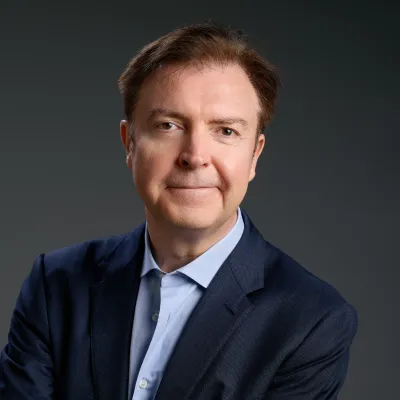
Ben Phillips
How is public policy shaped by narratives, and how can new narratives be developed to enable progressive policies within and between countries? Why have Germany and Europe adopted a story of fear that erodes their commitment to multilateralism and solidarity with the Global South? What counter-narratives can rebuild social cohesion and international cooperation?
More about Ben Phillips
Ben Phillips has spent his life working on a single question: how power is built and held, and how it can be shifted. Born in London in 1976, he grew up between his parents’ church values and the very different world of an all-boys private school at the height of the Thatcher era. The contradiction shaped him early. As a teenager he committed, on the spur of a classroom argument about apartheid, to spend his gap year teaching in a Black township in South Africa. In Mamelodi in 1994, the only white resident among two million people, he watched both the promise of the new democracy and its limits. The experience, he says, set the course of his life.
He studied history at Oxford, then built a career in campaigning and communications. He held senior roles at Save the Children, was Campaigns and Policy Director at Oxfam and ActionAid, co-founded the Fight Inequality Alliance, and served as Director of Communications at UNAIDS. In 2020 he published How to Fight Inequality, drawing on his study of 150 years of movements to show how inequality can be beaten. He now directs the Public Good Narrative Project at the Global Cooperation Institute.
His central claim is that dominant narratives shape the direction of politics. The post-war story of cooperation built welfare states and multilateral institutions; the neoliberal story that followed dismantled them; and after
2008 a story of fear took hold. As a Richard von Weizsäcker Fellow, Phillips is examining why solidarity is eroding in Germany and Europe, and what
counter-narratives might rebuild social cohesion and international
cooperation.
Resumé
1976 Born in London, UK
1984-1994 St Paul’s School, London
1994–1995 Teacher and ANC activist, Mamelodi township, South Africa
1995–1998 BA in History, New College, Oxford University
1999–2000 MA in Development Studies, Institute of Social Studies (ISS), Erasmus University Rotterdam, The Hague
2001–2008 Leadership roles in Save the Children, Oxfam, the Global Call to Action Against Poverty, and the Global Campaign for Education
2009–2011 Asia Strategy and Programs Director, Save the Children
2011–2012 Campaign Mobilization Director, Save the Children
2012–2014 Campaigns and Policy Director, Oxfam
2015–2017 Campaigns and Policy Director, ActionAid
2017–2018 Co-founder and Launch Director, Fight Inequality Alliance
2017 Resident Fellow on inequality, Rockefeller Foundation Bellagio Center
2018–2019 Hewlett Fellow of Public Policy, Kellogg Institute for International Studies, University of Notre Dame
2020 Publication: How to Fight Inequality: And Why That Fight Needs You (Wiley)
2019–2022 Advisor to the United Nations, governments and civil society organizations; author
2022–2024 Director of Communications, UNAIDS
2025–heute Director, the Public Good Narrative Project
2026 Richard von Weizsäcker Fellow, Robert Bosch Academy, Berlin

Ben Phillips' Richard von Weizsäcker Fellowship
The Story is the System: Rebuilding Solidarity in Germany and Europe through Progressive Narratives
Why do societies abandon solidarity? Ben Phillips’s answer is that they are talked out of it. His central argument is that dominant narratives, more than individual policies, shape what a society believes is possible and just. As a Richard von Weizsäcker Fellow, he is bringing this framework to the German and European context.
The impact of narratives of fear
Germany, Phillips argues, once told itself that it would thrive in a thriving world, valuing multilateralism, international law and respectful engagement with the Global South. Since the Russian invasion of Ukraine, two Trump presidencies and rising anxiety about migration, Germany’s confident, open narrative about itself has been undermined by the rise of a fearful story. The result, he says, is an erosion of “social Europe,” a declining acceptance of immigration, and a weakening commitment to international cooperation. His blunt diagnosis: “We don’t have a migration problem. We have a solidarity problem.”
Developing counter-narratives to rebuild solidarity and social cohesion
During his Fellowship, Phillips is examining the narrative drivers behind these shifts. He plans to be in dialogue with policymakers across the political spectrum, media leaders, civil society actors, trade unions, religious leaders, and foundations, as well as European institutions in Brussels and Frankfurt. He is particularly interested in why mainstream parties have struggled to make a confident case for their own values, rather than getting stuck as some have in what he calls “the AfD with water.”
The aim is not only diagnosis. Drawing on his Public Good Narrative Project, Phillips will be supporting social and political leaders in identifying counter narratives capable of rebuilding social cohesion and international cooperation, bringing together interest-based and ethics-based arguments. His conviction is that strengthening cooperation is in the interests of every country, and that a society which changes its story can change what its power is allowed to do.