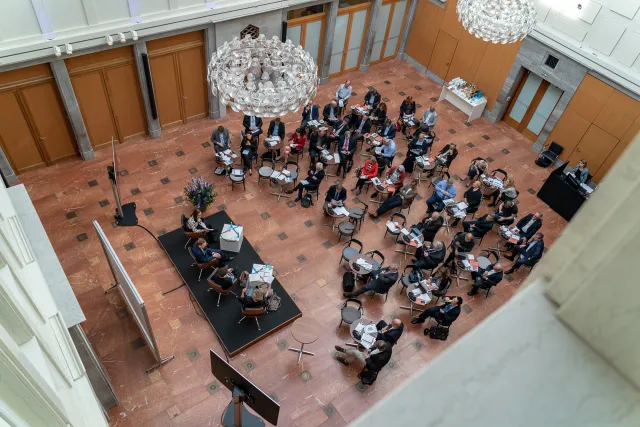
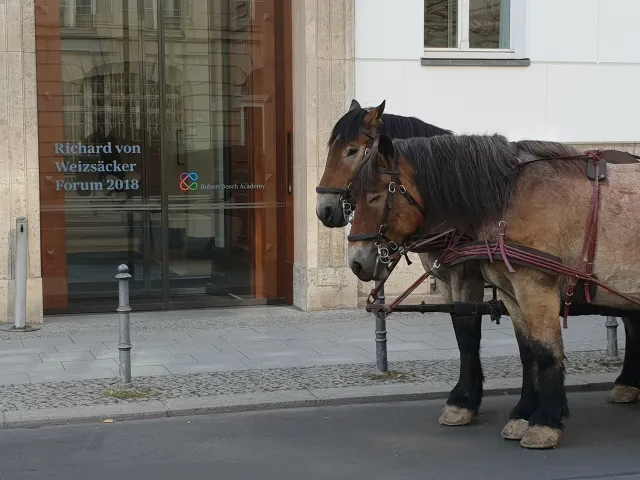
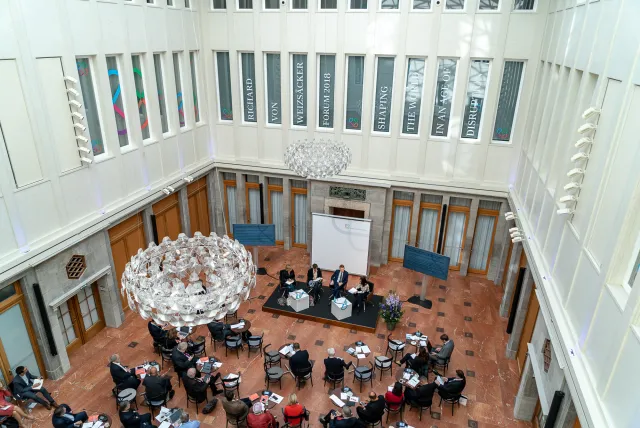
Richard von Weizsäcker Forum 2018
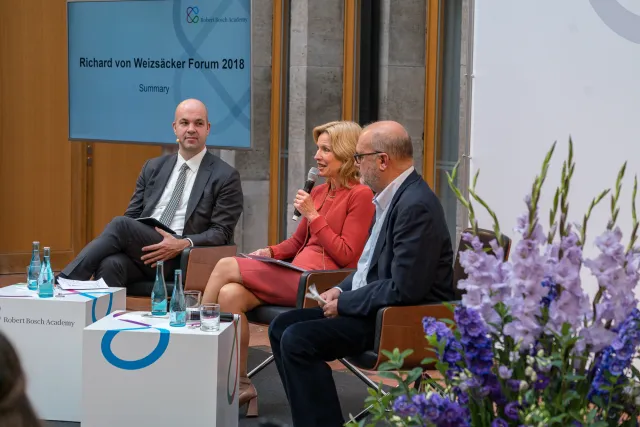
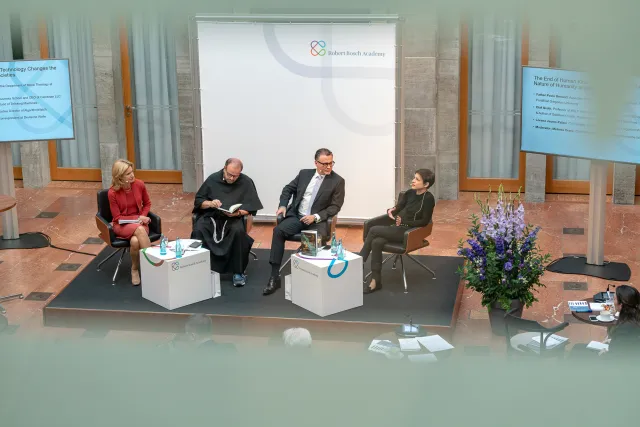
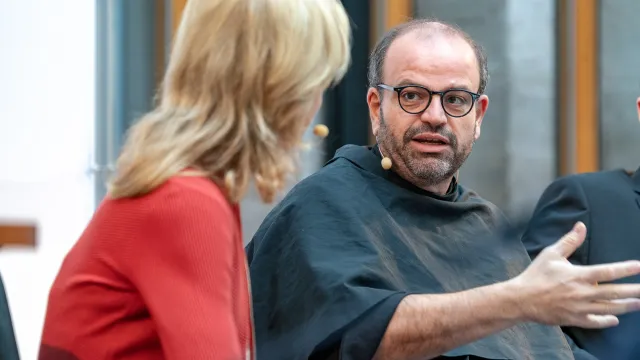
"Artificial intelligences are changing the world: every human activity, from medicine to national security, is undergoing profound transformations. Through technology, we change the world and even ourselves to inhabit the world. The question of our identity joins the ethical one. When a question arises with an AI, it responds autonomously: it is a sapiens machine. But of this autonomy - who answers? Who set it up? Who is using it? Who sells it? Who bought it?" (Paolo Benanti)
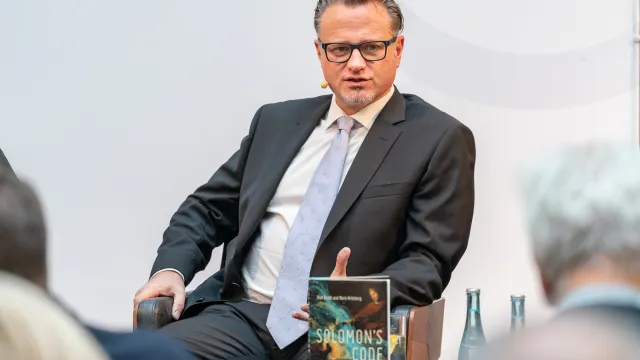
"We should be careful not to be distracted by dystopian hype about an AI super-intelligence taking over the world and instead realize the tremendous opportunities for both human and economic growth that flow from the evolution of specialized, narrow AI over the next 20 to 30 years. Yet, it is also true that power, trust, and values in and between our societies have started to change significantly because of machine learning. So, we should get used to and welcome thinking machines as valuable partners toward “symbio-intelligence” (symbiotic intelligence with machines) but we need to also ensure that this relationship gets shaped in a human-centric way, respecting our human goals, identities and purpose". (Olaf Groth)
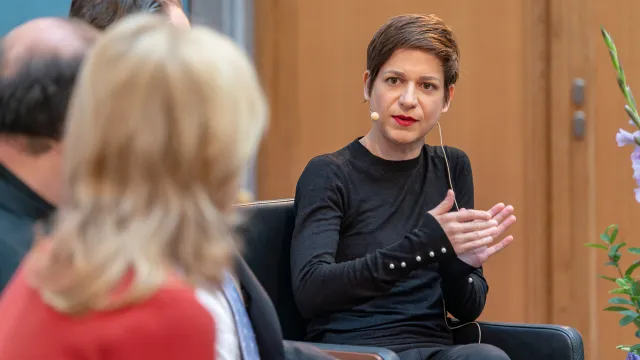
"Artificial intelligence is a collectivist technology. The mathematical formulas under AI are expressions of the social. AI does not understand individuals, it only knows collectives and categorizes human beings into fine granular profiles. To evaluate the social and ethical impact of AI, we need to look at it with an architectonical view. Many effects will not be detectable by analyzing the impact on individuals, but collectively. Actually AI is a new technological tool to build infrastructure in new fields. This is a challenge specially for European democracies; from a law dogmatical point of view, European democracies only know of individuals and only grant fundamental rights to them". (Lorena Jaume-Palasí)
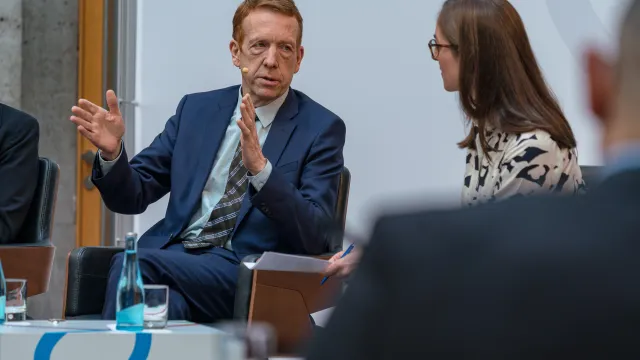
"The last fifteen years of rapid developments in communications and information technology coincided with a global trend of democratic recession, undercutting the hopeful earlier assumptions of a technology-driven great leap forward for democracy. Technology should not get a heavy share of blame for democracy's current global woes. The causes are many, ranging from the political consequences of economic slowdowns to the strangulation of democratic transitions by systematic corruption. But unfortunately, for every democratic innovation that new technologies seem to make possible - like new forms of citizen-government interaction - there is a matching dark side of new technological tools for the many postmodern authoritarians who are increasingly asserting global influence". (Thomas Carothers)
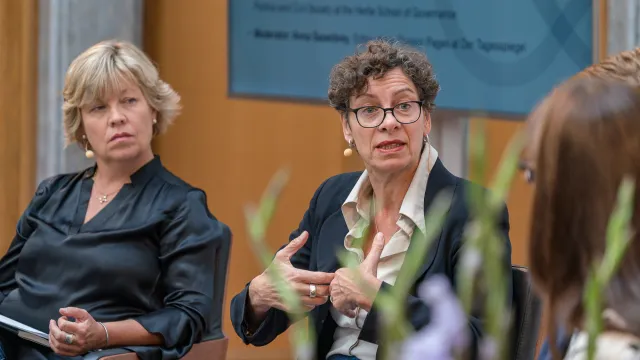
"The Internet has re-distributed authorship and, as a result, gives visibility to political views that mainstream mass media used to ban". (Jeanette Hofmann)
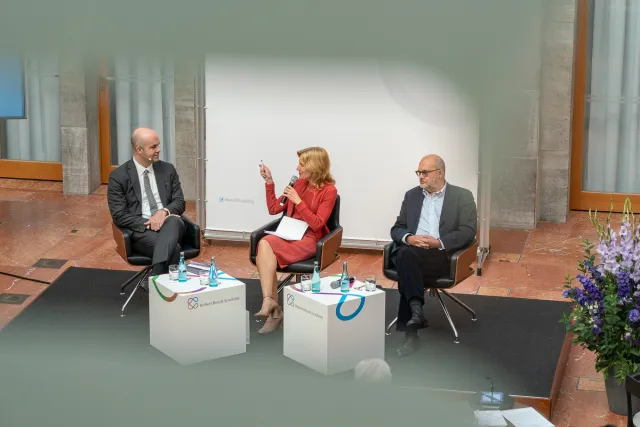
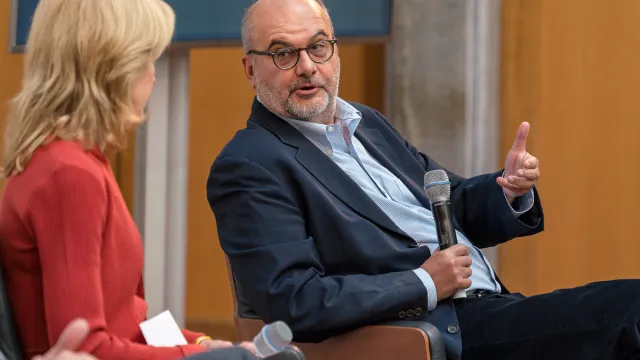
"We need to distinguish between the likely effect on jobs and on income inequality. While I think that individual occupations may be affected as machines (robots, AI) do some jobs more cheaply and more efficiently than people, we should not disregard the likelihood of many new occupations and jobs that it will create. We cannot forecast what these jobs will be – no more than we could in the past. The effect on the overall number of jobs may thus be very different from the effect on individual occupations. Regarding what may happen to income inequality, I am more pessimistic. A very likely increase in the share of income accruing to capital will raise inequality because capital is heavily concentrated. So, the measures to check the negative effects of automation should be directed towards prevention of further inequality". (Branko Milanovic)
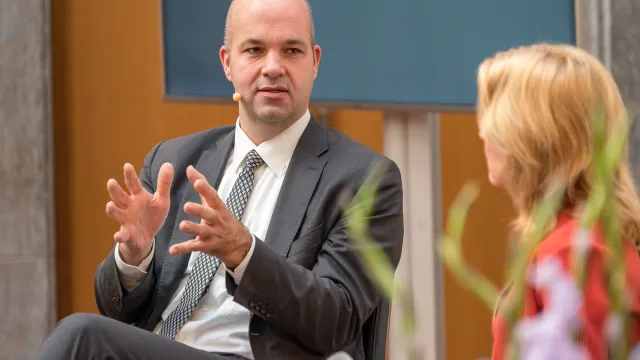
"Technological change does not only create opportunities, but it also challenges in particular people who are less skilled and less able to adjust. Smart policies should not try to prevent change, but rather focus on creating opportunities and improving inclusiveness. This requires a fundamental change in social policies that focuses on improving ownership as well as preventing the abuse committed by a few market players“. (Marcel Fratzscher)
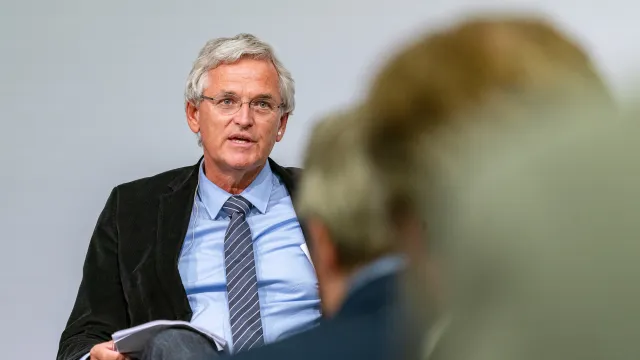
Auf den “Fellows in Conversation Day” folgte eine Studienreise, die sich mit dem Thema beschäftigte, wie Deutschland sich auf die Zukunft vorbereitet und wie es sich zukünftig positioniert. Die Reise begann mit einem Hintergrundgespräch mit Peter Frey, dem Chefredakteur des Zweiten Deutschen Fernsehens (ZDF).
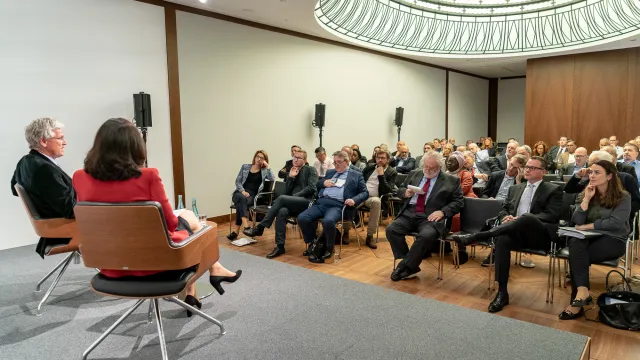
"The trust that people in Germany have in the truthful reporting of public broadcasters is still high. In times of pressure and crisis, the established media is being trusted even more. Our most important task is to stabilize the center of society with arguments, images, and critical interviews. We must create a counterweight with our well-researched facts and solid background information against erroneous reports, rumors, and hate messages – not only on TV, but also online and on social media platforms". (Peter Frey)
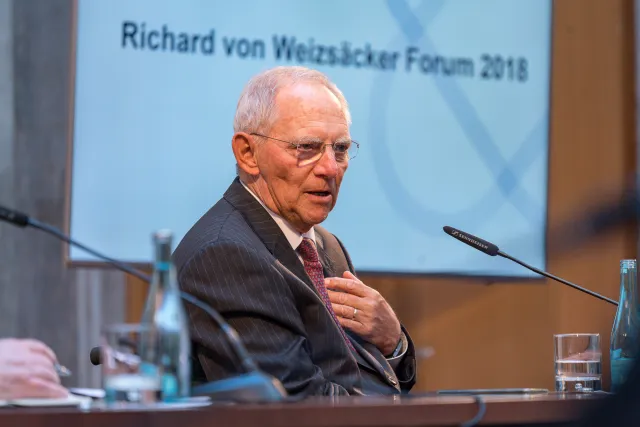
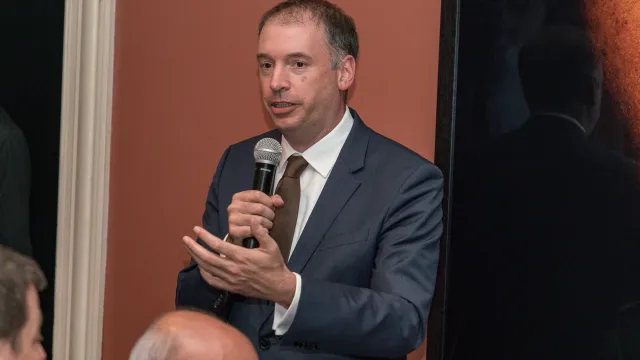
Mit Bundestagsabgeordneten diskutierten die Fellows die politischen Herausforderungen, die Deutschland in den kommenden Jahren erwartet.
Gesprächsteilnehmer waren: Niels Annen, Staatssekretär im Auswärtigen Amt; Steffen Bilger, Parlamentarischer Staatssekretär im Bundesministerium für Verkehr und Digitale Infrastruktur; Mark Hauptmann (CDU); Stefan Liebich (Die Linke) und Tobias Lindner (Bündnis 90/Die Grünen).
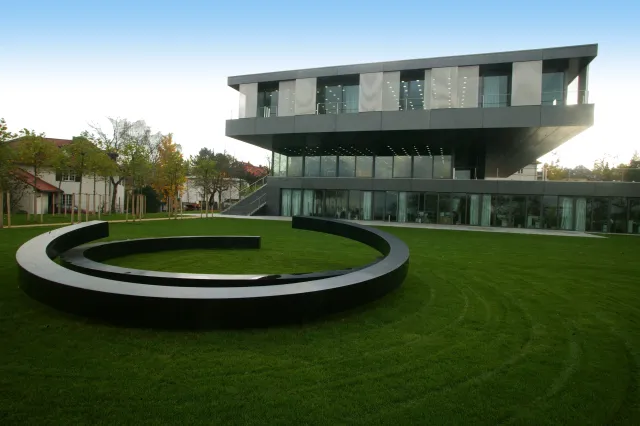
"Germany’s economic turnaround has often been credited to labor market and welfare reforms, but the increased investment in education, research, and innovation has been potentially even more important for long-term growth. This is especially true in Baden-Wurttemberg, where we not only invest heavily in science and academia, but also grant our researchers the trust and freedom to do their best work – thus opening up perspectives for a promising future". (Theresia Bauer)
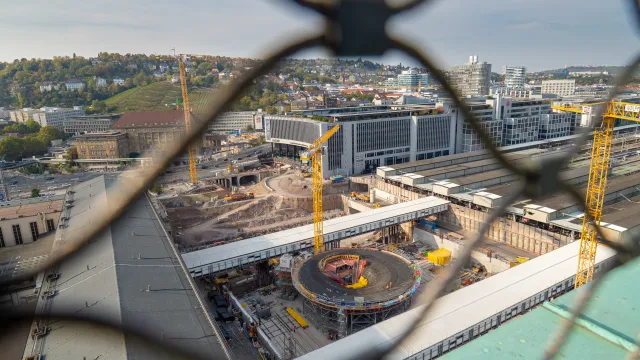
Die Besichtigung der Baustelle von “Stuttgart 21“ gab den Fellows einen Einblick in eines der größten Verkehrs- und Stadtentwicklungsprojekte in Deutschland.
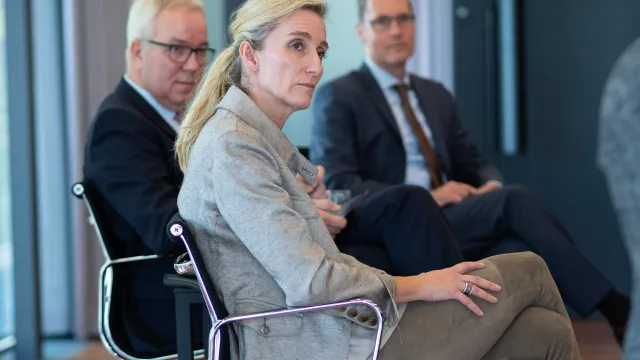
Wie ist der Erfolg der deutschen Wirtschaft zu erklären? Ist die deutsche Wirtschaft innovativ genug? Diese und andere Fragen wurden im Rahmen eines Roundtable diskutiert. Teilnehmer waren Frank Terhorst, Mitglied im Executive Leadership Team und Head of Crop Strategy & Portfolio Management der Division Crop Science von Bayer und Anette Bronder, Geschäftsführerin der Digital Division von T-Systems International und Geschäftsführerin Telekom Security der Deutschen Telekom.
Moderiert wurde die Diskussion von Torsten Riecke, dem internationalen Korrespondenten des Handelsblatts.
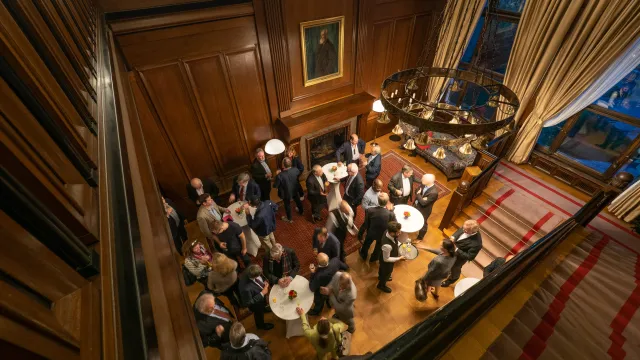
Während eines Abendessens mit Repräsentanten aus Politik, Wirtschaft und Zivilgesellschaft in Baden-Württemberg gewannen die Fellows Erkenntnisse über Debattenthemen auf der Ebene des Bundeslandes.
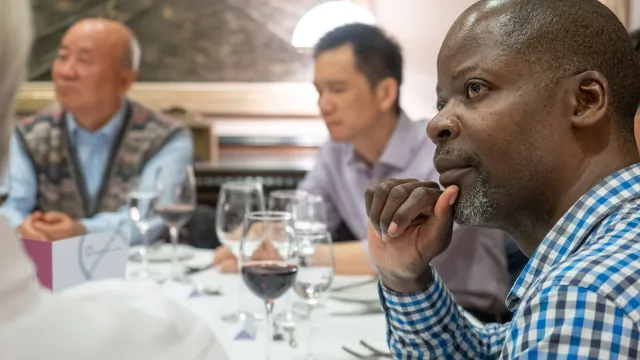
Am Gespräch nahmen teil: Michael Blume, Beauftragter der Landesregierung gegen Antisemitismus und Ronald Grätz, Generalsekretär des Instituts für Auslandsbeziehungen.
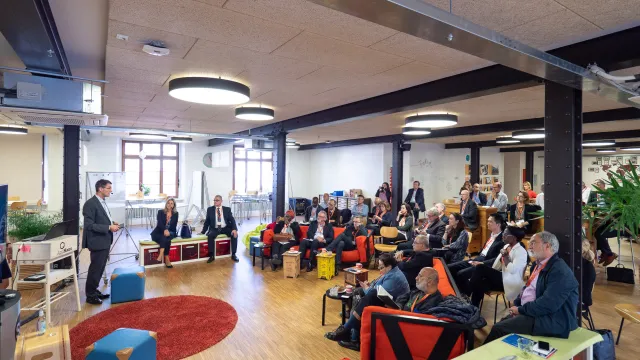
Der nächste Tag begann mit einem Besuch bei SAP in Heidelberg. Im Gespräch mit SAP-Vorstandsmitglied Bernd Leukert und Ina Schlie, Senior Vice President Digital Government, informierten sich die Fellows über die Innovationspolitik des Unternehmens.
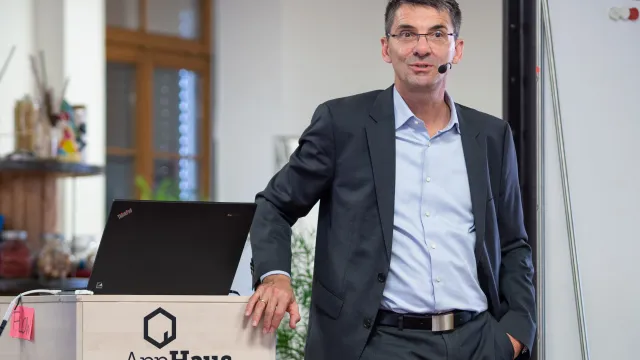
"Sustainability of resources is one of the biggest challenges of our time. We have a unique opportunity to harness digital technologies, and the societal shifts they trigger, to help address environmental issues and redesign how we manage our shared global environment”. (Bernd Leukert)
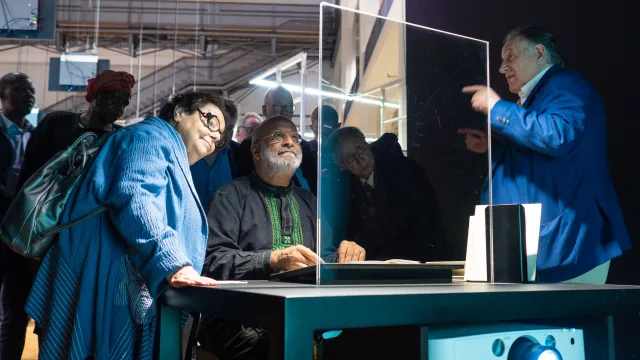
In Karlsruhe besuchten die Fellows das Zentrum für Kunst und Medien (ZKM) und trafen dessen Vorstand Peter Weibel.
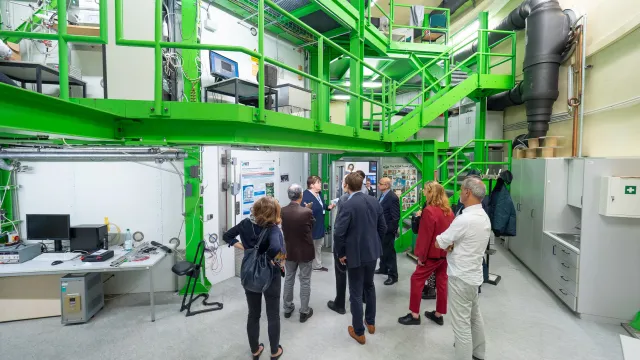
Am Karlsruher Institut für Technologie (KIT) sprachen sie mit dem Vizepräsidenten für Innovation und Internationales, Thomas Hirth.
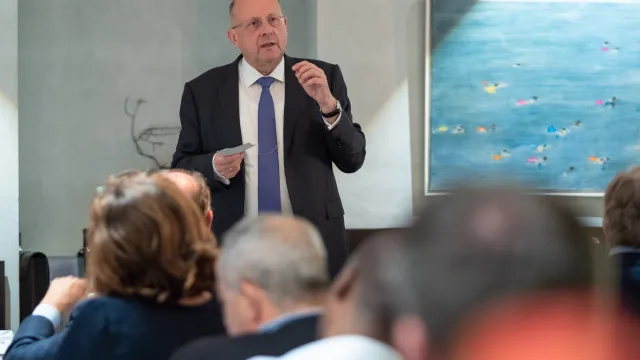
Zum Abschluss des Tages in Karlsruhe tauschten sich die Fellows mit Ferdinand Kirchhof, Vizepräsident des Bundesverfassungsgerichts, aus.
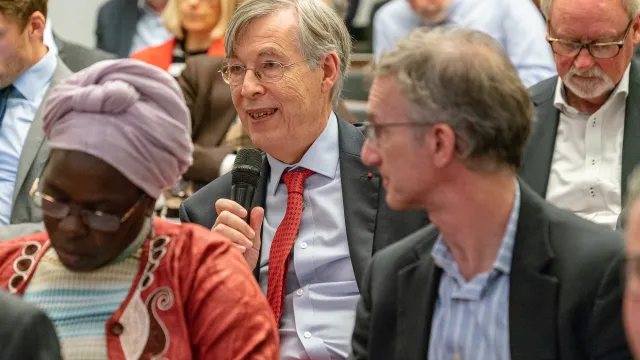
Die Begegnungen und Diskussionen während des Richard von Weizsäcker Forums boten den 50 Fellows aus mehr als 20 Ländern neue Perspektiven und Einsichten.
"The admirable quest for perfection in the German economy was on display at every turn. But German economic satisfaction and political paralysis could combine to remove the incentive and the ability of Germany to change and adapt in the European framework. Germany alone cannot meet the geo-economics and strategic challenges from China and the US and the threat of violence from the South and Russia". (François Heisbourg)
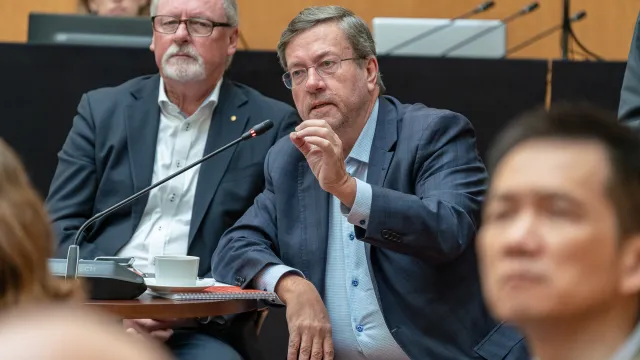
“The study tour offered a rare opportunity for fellows to understand that Germany's culture of innovation is distinct from that of the U.S., China, or other countries and why, despite many challenges, the German economy remains world class". (Daniel Hamilton)

"As it was the case since its inception the study trip has been again a great opportunity to dive into the complex reality of Germany from a specific and very important angle. This time we got to know more and understood better how science, industry and policy-makers are preparing the German society for the challenges of the new age". (Sonja Licht)